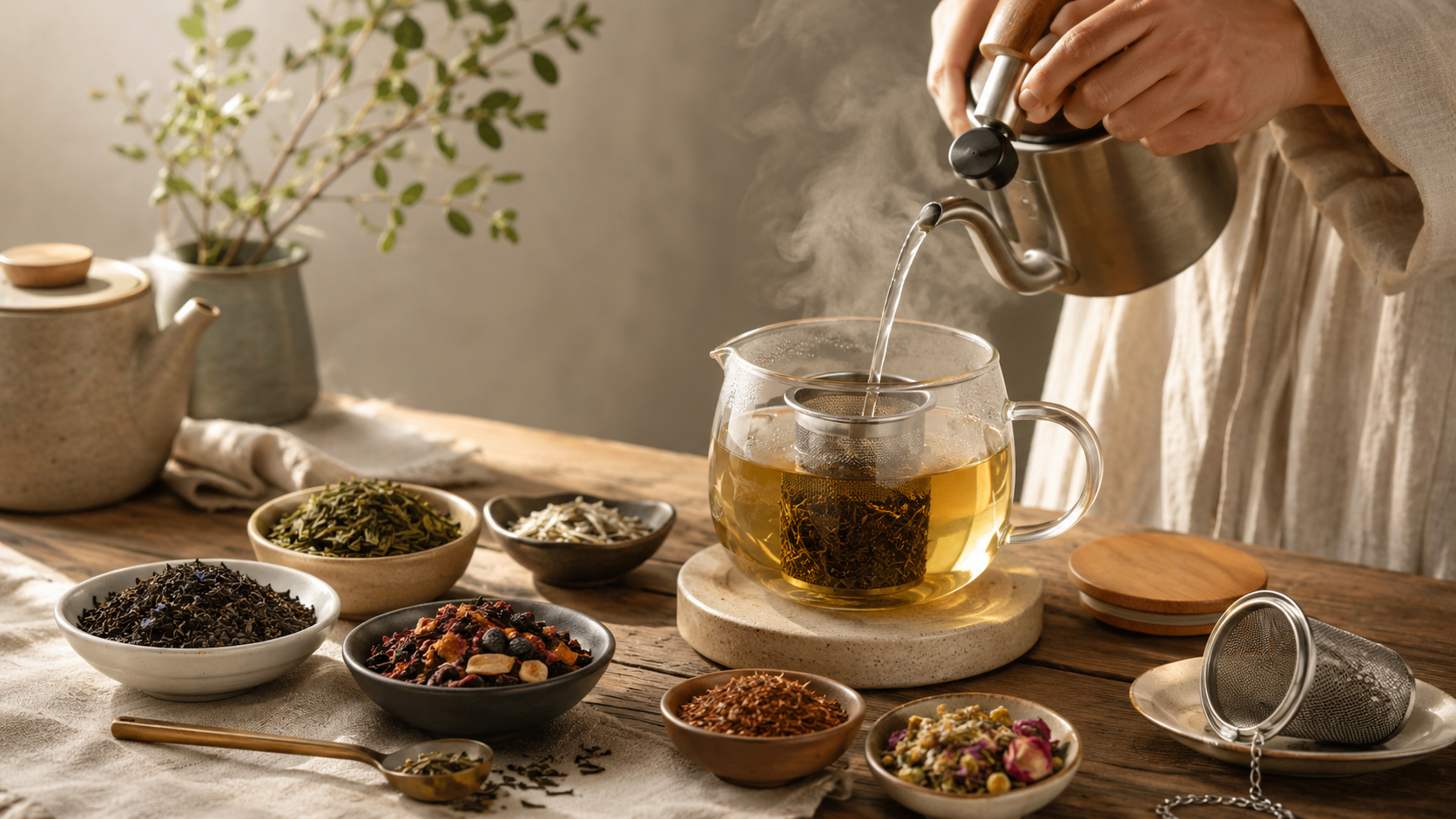
How to Brew Loose Leaf Tea: Temperature, Steeping Time and Ratios
Learning how to brew loose leaf tea properly can completely change the way your tea tastes. The same leaves can produce a smooth, aromatic and balanced cup—or a bitter, weak or overly intense one—depending on how much tea you use, the water temperature and how long you allow it to steep.
The good news is that making loose leaf tea is not complicated. Once you understand a few basic brewing principles, you can prepare everything from delicate green tea to robust black tea, fruity infusions and naturally caffeine-free rooibos with confidence.
This loose leaf tea brewing guide explains:
- How much loose leaf tea to use per cup
- The ideal tea-to-water ratio
- The correct tea brewing temperature
- Recommended tea steeping times
- How to prepare different types of tea
- Which teapots, infusers and strainers work best
- How to avoid the most common brewing mistakes
Loose Leaf Tea Brewing Guide at a Glance
Use the table below as a starting point whenever you prepare loose leaf tea.
| Tea type | Water temperature | Steeping time |
|---|---|---|
Black tea | 90–100°C | 3–5 minutes |
Green tea | 70–85°C | 2–3 minutes |
White tea | 75–85°C | 3–5 minutes |
Herbal tea | 95–100°C | 5–10 minutes |
Fruit tea | 95–100°C | 5–10 minutes |
Rooibos tea | 95–100°C | 5–8 minutes |
These recommendations are a useful general guide. Always check the preparation instructions supplied with the individual tea, as leaf size, ingredients and the style of the blend can affect the ideal temperature, quantity and steeping time.
A light green tea, for example, usually benefits from cooler water and a shorter infusion. A robust black tea can handle hotter water and a slightly longer steep.
What You Need to Brew Loose Leaf Tea
You do not need expensive equipment to make good loose leaf tea. A few simple tools are enough.

Loose leaf tea
Start with a tea that suits your taste and the time of day.
You can explore:
- Black tea for rich, full-bodied flavour
- Green tea for fresh, grassy or gently floral notes
- White tea for a lighter, more delicate cup
- Herbal tea for naturally caffeine-free botanical infusions
- Fruit tea for vibrant, naturally fruity flavours
- Rooibos tea for a smooth, naturally caffeine-free drink
- Premium tea blends for more complex flavour combinations

Fresh water
Tea is mostly water, so water quality has a noticeable effect on the finished drink.
Use fresh, cold water whenever possible. Heavily chlorinated or strongly mineralised water can mask the more delicate aromas in tea.
Avoid repeatedly boiling the same water. Freshly drawn water generally produces a brighter and more enjoyable cup.

A kettle
A temperature-controlled kettle is convenient, especially if you regularly brew green or white tea. However, an ordinary kettle also works.
After boiling, allow the water to cool briefly before pouring it over delicate leaves.
As a rough guide:
- Around one minute of cooling can bring the water closer to the black-tea range.
- Several minutes of cooling may be needed for green or white tea.
- Pouring the water into another vessel first can help it cool more quickly.

A tea infuser or strainer
The leaves need enough space to expand and move through the water. A roomy basket infuser is therefore usually better than a very small tea ball.
Browse the tea infusers and strainers available from Leaf & Spice if you want a simple reusable option for mugs and teapots.
A cup or teapot
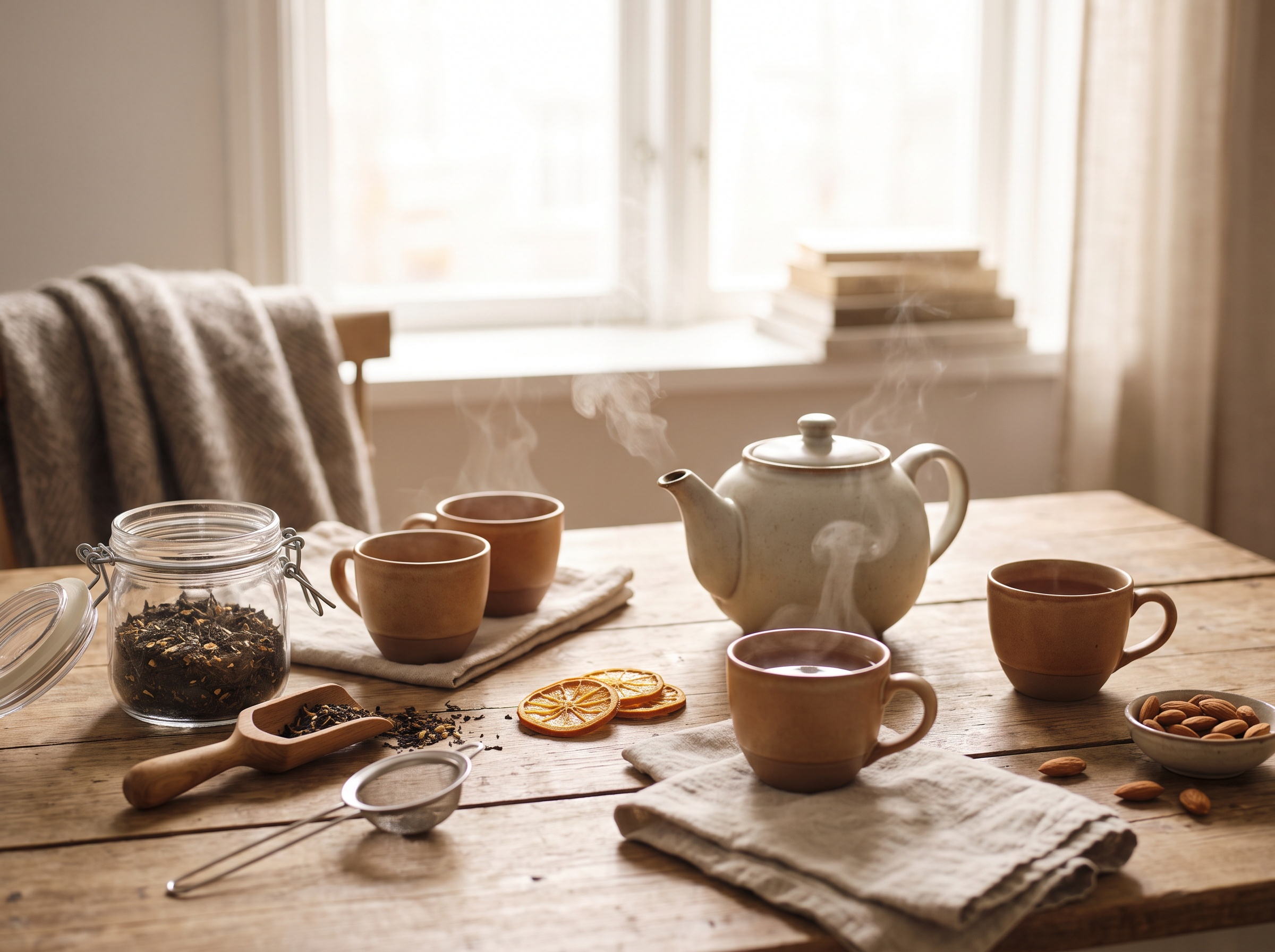
You can brew loose leaf tea directly in a mug or prepare several servings in a teapot.
A teapot is especially practical when:
- Preparing tea for several people
- Brewing larger quantities
- Serving tea at the table
- Re-steeping the same leaves
- Creating a slower tea ritual
Explore the Leaf & Spice collection of teapots for loose leaf tea.
A timer
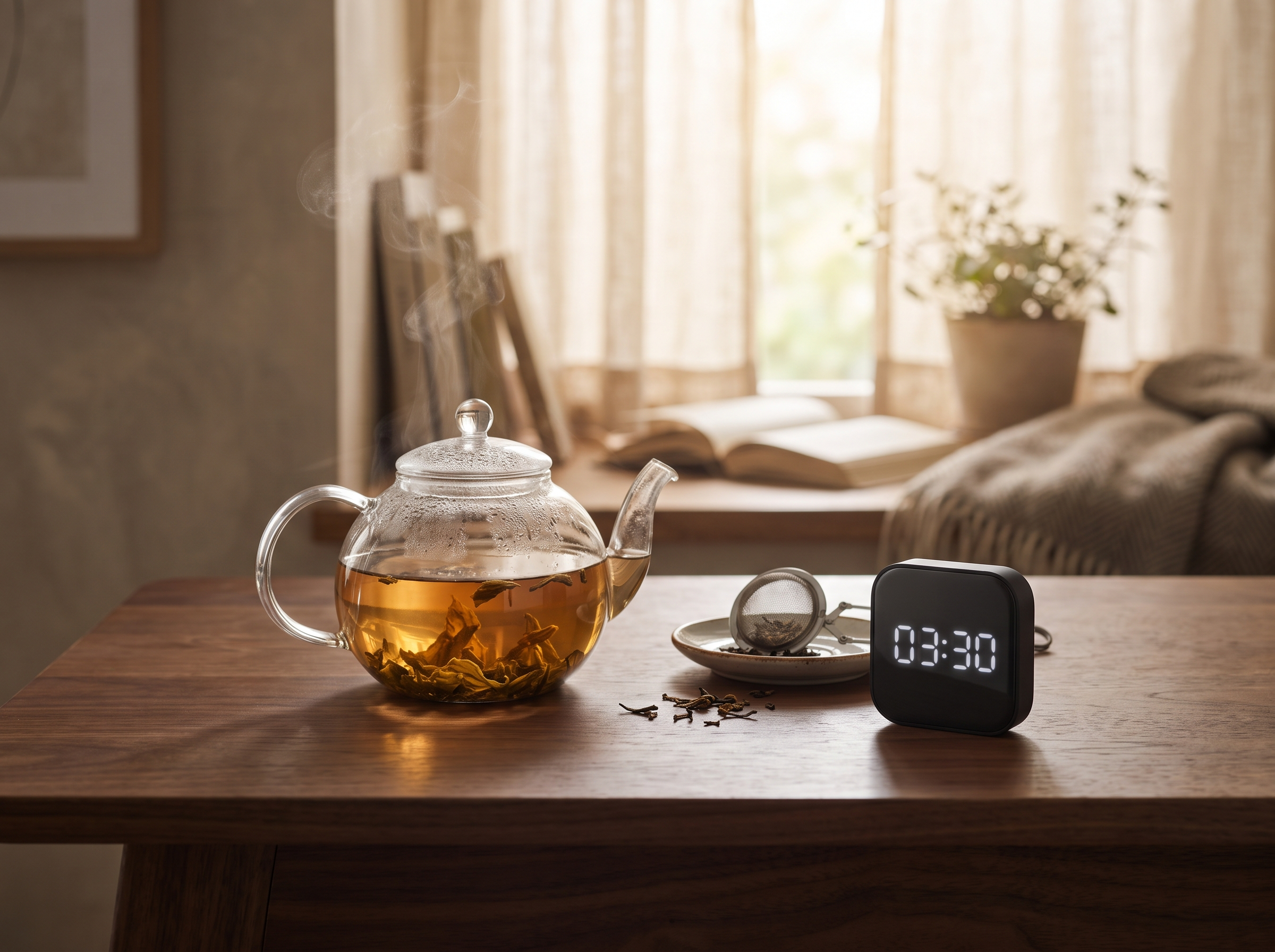
Tea can change quickly during the final minute of steeping. Using a timer helps you get consistent results and prevents delicate tea from becoming bitter.

Optional kitchen scale
A teaspoon is convenient, but tea leaves differ considerably in size and density.
One teaspoon of tightly rolled tea may weigh much more than one teaspoon of large white tea leaves. A small digital scale gives you a more accurate tea-to-water ratio, particularly when you are trying a tea for the first time.
How Much Loose Leaf Tea Should You Use Per Cup?
A good general starting point is:
2–3 grams of loose leaf tea per 250 ml of water.
This is approximately one level teaspoon for many black and green teas. However, the volume can vary considerably.
Large, light leaves take up more room, while finely cut or tightly rolled leaves are denser. Herbal and fruit teas may also contain larger pieces of fruit, flowers, bark, spices or roots, so they often require a more generous spoonful.
Loose leaf tea quantity by cup size
| Water volume | General starting amount |
|---|---|
200 ml | 2 g |
250 ml | 2–3 g |
350 ml | 3–4 g |
500 ml | 4–6 g |
1 litre | 8–12 g |
For fruit infusions and blends with large ingredients, you may need approximately 12–20 grams per litre.
The instructions on the individual tea should always take priority over a general ratio.
The Ideal Tea-to-Water Ratio
The best tea-to-water ratio depends on the tea and your personal preferences, but the following formula works well for everyday brewing:
1 gram of tea for every 100 ml of water
This means:
- 2.5 g for a 250 ml mug
- 5 g for a 500 ml teapot
- 10 g for a 1 litre teapot
You can then adjust the ratio after tasting the tea.
If your tea tastes too weak
Use slightly more tea leaves rather than dramatically increasing the steeping time.
Longer steeping can extract more tannins and stronger flavours without necessarily improving the tea’s aroma or balance.
If your tea tastes too strong
Reduce the quantity of leaves, shorten the steeping time or use slightly cooler water.
Change only one variable at a time. This makes it easier to understand what improves the result.
How to Make Loose Leaf Tea Step by Step
The following method works for most loose leaf teas.

1. Use fresh water
Fill your kettle with the amount of fresh water you need. Avoid boiling considerably more water than necessary.

2. Heat the water to the correct temperature
Use hotter water for black, herbal, fruit and rooibos teas. Use cooler water for green and white teas.
Water temperature is one of the most important parts of learning how to make loose leaf tea properly.
3. Warm the cup or teapot
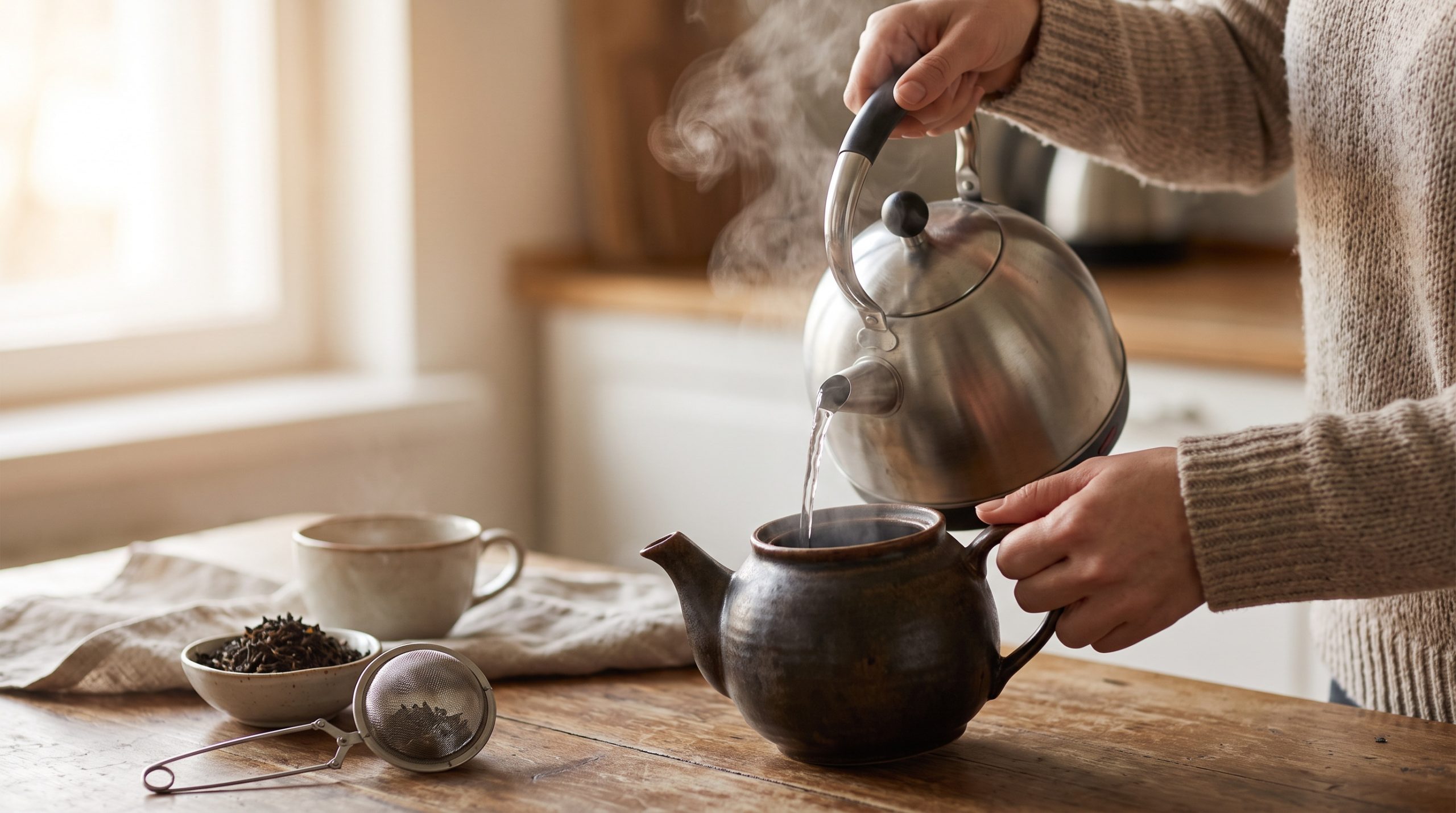
Pour a little hot water into your cup or teapot, swirl it around and discard it.
Preheating is optional, but it helps maintain a stable brewing temperature—particularly when using a thick ceramic or cast-iron teapot.

4. Measure the tea
Start with approximately 2–3 grams per 250 ml cup. Use more for bulky fruit or herbal blends if recommended.

5. Place the leaves in an infuser or teapot
Give the leaves enough room to open.
Avoid packing large tea leaves into a tiny infuser. Restricted leaves cannot circulate through the water as freely, which may result in uneven extraction.

6. Pour the water over the tea
Pour the heated water directly over the leaves so they are fully immersed.

7. Start your timer
Use the recommended steeping time for the tea type. Taste the tea near the lower end of the suggested range when preparing a new blend.

8. Remove the leaves
Take out the infuser or pour the tea through a strainer.
Do not leave the leaves sitting in the water unless you want the tea to continue becoming stronger.
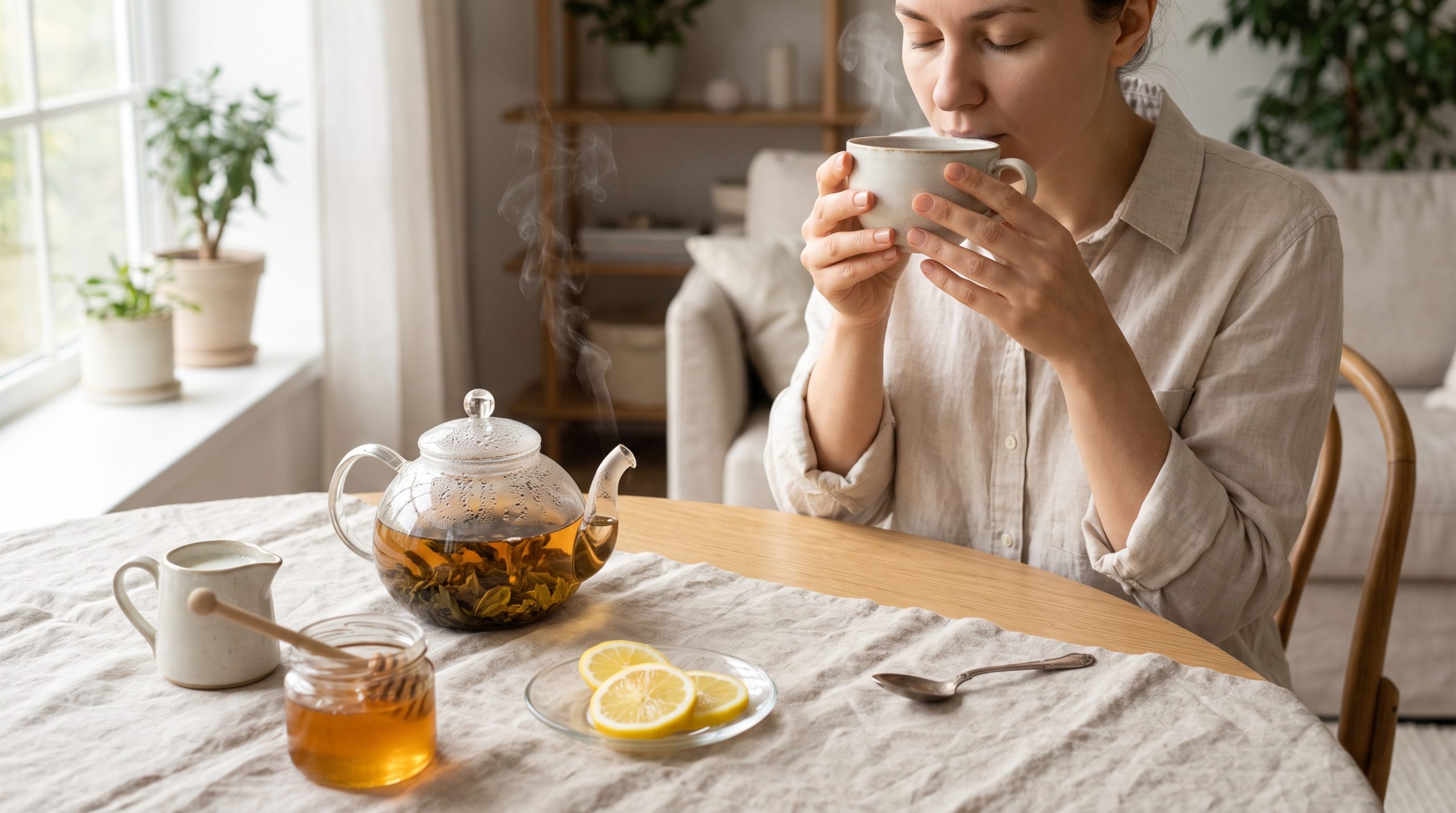
9. Taste before adding anything
Taste the tea plain first. This allows you to understand its natural flavour and decide whether it needs milk, lemon, honey or another addition.
Tea Brewing Temperature Chart
Using the correct temperature helps extract flavour and aroma without overwhelming the tea.
70–85°C: delicate teas
This range is generally suitable for:
- Green tea
- Delicate green tea blends
- White tea
- Some mixed green and white teas
Cooler water can help preserve fresh, floral and gently vegetal flavours.
90–100°C: stronger teas and infusions
This range generally works well for:
- Black tea
- Herbal tea
- Fruit tea
- Rooibos
- Chai-style blends
- Blends containing roots, bark or larger dried fruit pieces
These ingredients often need hotter water to release their full flavour.
Tea Steeping Time Chart
| Tea type | Start tasting after | Typical maximum |
|---|---|---|
Green tea | 2 minutes | 3 minutes |
Black tea | 3 minutes | 5 minutes |
White tea | 3 minutes | 5 minutes |
Rooibos tea | 5 minutes | 8 minutes |
Herbal tea | 5 minutes | 10 minutes |
Fruit tea | 5 minutes | 10–12 minutes |
A longer steep does not always mean a better or stronger cup. For black and green tea, using more leaves usually produces a better strong tea than leaving the same leaves in the water for too long.
Herbal and fruit infusions are generally more forgiving and can often be steeped longer without becoming unpleasantly bitter.

How to Brew Black Tea
Black tea is one of the easiest loose leaf teas to prepare. Its fully oxidised leaves can handle hotter water and usually produce a rich, aromatic cup.
Recommended method
- Tea: 2–3 g per 250 ml
- Water temperature: 90–100°C
- Steeping time: 3–5 minutes
Begin with three minutes if you plan to drink the tea plain. Allow it to steep a little longer if you prefer a stronger cup or plan to add milk.
For a fruitier black tea, try Blackberry Tango Black Tea with Assam and Wild Berries.
How to prevent bitter black tea
Black tea may taste bitter when:
- Too many leaves are used
- The tea is steeped too long
- Finely cut leaves are treated like large whole leaves
- The brewed tea is left sitting on the leaves
Remove the leaves promptly and adjust the amount on your next brew.

How to Brew Green Tea
Green tea requires a little more care than black tea, but it is easy to prepare once you stop pouring fully boiling water directly over the leaves.
Recommended method
- Tea: 2–3 g per 250 ml
- Water temperature: 70–85°C
- Steeping time: 2–3 minutes
Start at approximately 75–80°C for a delicate green tea. Stronger or tightly rolled green teas may work well closer to 85°C.
Why green tea sometimes tastes bitter
The most common reason is water that is too hot. Excessive steeping time can also produce an overly sharp or astringent cup.
If your green tea tastes bitter:
- Reduce the water temperature.
- Shorten the steeping time.
- Use slightly fewer leaves.
- Do not squeeze or press the leaves after brewing.
Read our guide to the benefits of green tea to learn more about the different ways green tea can fit into your daily routine.
Is matcha brewed in the same way?
No. Matcha is a powdered green tea that is whisked into water rather than steeped and removed.
Our guide to what matcha tea is explains how matcha differs from ordinary loose leaf green tea and how to prepare it.

How to Brew White Tea
White tea has a delicate character and often consists of large, light leaves or buds.
Recommended method
- Tea: 2–3 g per 250 ml
- Water temperature: 75–85°C
- Steeping time: 3–5 minutes
Because white tea leaves can be bulky, one teaspoon may not always be enough. Use a scale when possible or measure one to two loose teaspoons depending on leaf size.
A blend such as From Paris with Love Green and White Tea should be prepared gently because it combines two delicate tea styles.
Avoid using aggressively boiling water unless the individual product instructions specifically recommend it.
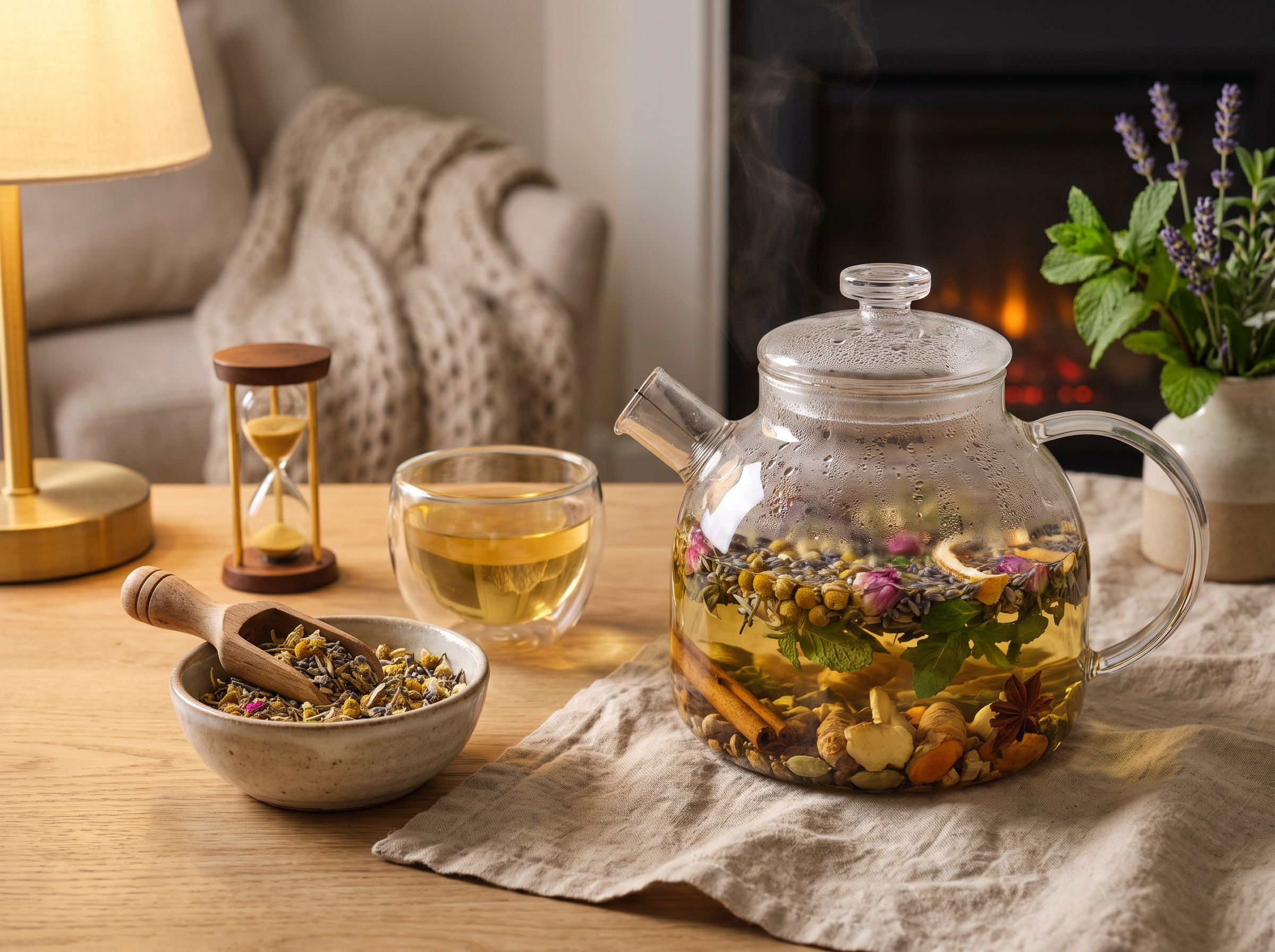
How to Brew Herbal Tea
Herbal tea is technically an infusion rather than a traditional tea because it may be made from flowers, leaves, seeds, roots, bark or spices rather than leaves of the tea plant.
Recommended method
- Tea: 2–4 g per 250 ml
- Water temperature: 95–100°C
- Steeping time: 5–10 minutes
Herbal ingredients generally need hot water and a longer steep to release their flavour.
For an evening infusion, Alveus Calm Down Organic Herbal Tea is an example of a loose herbal blend designed for a slower tea ritual.
You can find more caffeine-free ideas in our guide to the best tea for sleep and relaxation.
Should herbal tea be covered while steeping?
Covering the cup or teapot can help retain heat and aromatic steam. This is particularly useful for blends containing mint, lavender, citrus peel or other aromatic ingredients.

How to Brew Fruit Tea
Fruit tea usually contains dried fruit, berries, flowers, spices or flavouring ingredients. These pieces are often larger than ordinary tea leaves, so fruit blends may require more tea per cup.
Recommended method
- Tea: 3–5 g per 250 ml
- Water temperature: 95–100°C
- Steeping time: 5–10 minutes
Some dense fruit blends benefit from 10–12 minutes of steeping. Check the preparation instructions for the individual tea.
Candy Apple Fruit Tea with Apple, Caramel and Vanilla is an example of a substantial fruit blend that benefits from hot water and a generous infusion.
Fruit tea can also be chilled and served over ice. For cold-brewing methods, serving ratios and summer recipes, read our guide on how to make perfect iced tea at home.
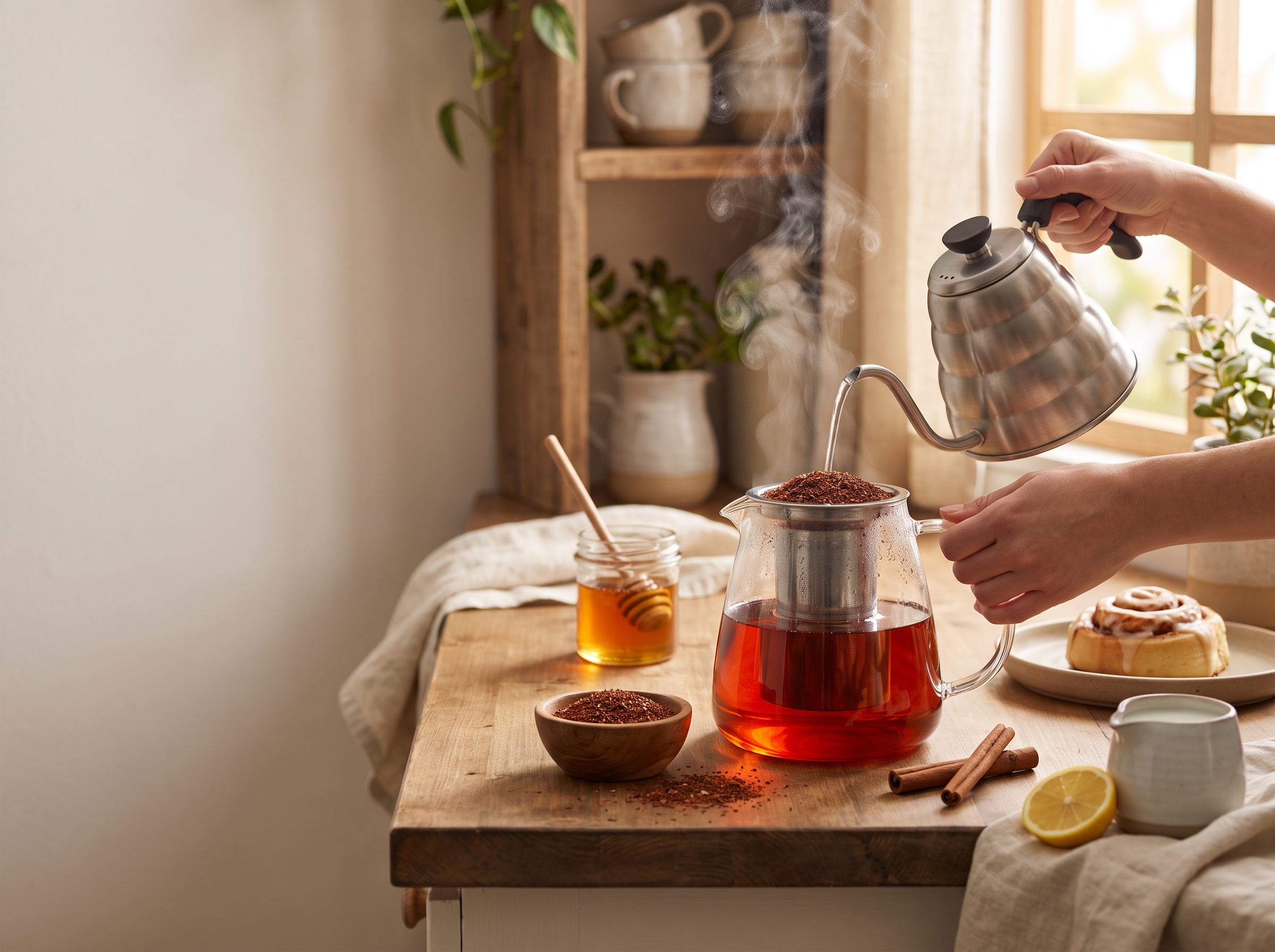
How to Brew Rooibos Tea
Rooibos is a naturally caffeine-free infusion from South Africa with a smooth, gently sweet and sometimes slightly earthy flavour.
It is more tolerant of high temperatures and longer steeping times than green or white tea.
Recommended method
- Tea: 2–3 g per 250 ml
- Water temperature: 95–100°C
- Steeping time: 5–8 minutes
Rooibos can usually be steeped a little longer if you prefer a stronger flavour. It is enjoyable plain but also works well with milk, honey, lemon or warming spices.
For a richer dessert-inspired option, try Organic Rooibos Cinnamon Roll.

How to Brew Premium Tea Blends
Premium tea blends may combine:
- Black and green tea
- Green and white tea
- Tea leaves and fruit
- Tea and herbs
- Rooibos and spices
- Flowers, citrus peel or natural flavourings
When a blend contains several ingredients, the correct brewing temperature usually depends on its most delicate tea leaves.
For example, a blend containing green and white tea should normally be brewed more gently than a fruit infusion containing no traditional tea leaves.
The individual preparation instructions are especially important for mixed blends. Explore the premium tea blends collection to find combinations beyond traditional single-style teas.
Can Loose Leaf Tea Be Steeped More Than Once?
Many loose leaf teas can be steeped more than once.
Green, white and some high-quality black teas often continue releasing flavour during a second infusion. The second cup may taste softer, lighter or reveal different aromatic notes.
How to re-steep tea leaves
- Remove the leaves completely after the first infusion.
- Keep them in the infuser or teapot.
- Add fresh water at the appropriate temperature.
- Increase the next steep by approximately 30–60 seconds.
- Taste and adjust.
Some teas can produce two or three enjoyable infusions. Others lose most of their flavour after the first cup.
Herbal and fruit blends can be re-steeped, but the second infusion is often considerably lighter because many of their soluble flavours are released during the first long brew.
Do not leave wet tea leaves sitting at room temperature for an extended period. Re-steep them reasonably soon after the first infusion.
Common Loose Leaf Tea Brewing Mistakes
Using boiling water for every tea
Boiling water works well for black, herbal, fruit and rooibos tea, but it can overwhelm delicate green or white tea.
Match the temperature to the tea type.
Using too much tea
More tea does not automatically produce a better drink. Excess leaves can make black or green tea overly intense and astringent.
Begin with the standard ratio and adjust gradually.
Steeping for too long
Over-steeping is one of the most common causes of bitter tea.
Set a timer and remove the leaves completely once the recommended time has passed.
Using too little tea and steeping it longer
This often produces a thin but bitter drink.
For a fuller flavour, use a little more tea while keeping the steeping time within the recommended range.
Using an infuser that is too small
Tea leaves need room to expand. A tightly packed tea ball may prevent the water from circulating evenly around larger leaves.
Choose a basket infuser or teapot with a roomy removable filter.
Leaving the infuser in the cup
If the leaves remain in the water, the tea continues to extract. This may be acceptable for some herbal infusions, but black and green tea can quickly become too strong.
Ignoring the product instructions
General charts are helpful, but every blend is different.
A fine black tea, large white tea, dense fruit infusion and herbal blend containing roots will not behave in exactly the same way.
Judging the tea after only one attempt
Your first cup gives you a starting point. Adjust one variable during the next brew:
- More or less tea
- Hotter or cooler water
- A shorter or longer steep
After two or three attempts, you will usually find the ratio that suits your taste.
Teapot, Infuser or Tea Strainer: Which Is Best?
The best brewing tool depends on how much tea you prepare and how you like to drink it.
Basket infuser
A basket infuser is the most practical choice for everyday brewing.
It:
- Fits inside a mug or teapot
- Gives leaves room to expand
- Is easy to remove at the correct time
- Is simple to clean
- Works with most tea types
Tea ball or tea egg
A tea ball is compact and convenient, but it works best with smaller tea leaves.
Avoid overfilling it. The leaves should have enough room to move as they absorb water.
Teapot with a removable infuser
This is ideal when preparing several cups.
Removing the infuser after brewing prevents the remaining tea from becoming stronger while you drink the first cup.
Glass teapots let you watch the leaves open, while ceramic and cast-iron teapots retain heat well.
Separate tea strainer
You can let the leaves move freely inside the teapot and pour the tea through a strainer into each cup.
This gives the leaves maximum room but requires you to pour all the brewed tea away from the leaves once the infusion is complete.
Disposable or reusable tea filter
Tea filters are useful when:
- Brewing at work
- Travelling
- Preparing tea in a hotel
- Using very fine leaves
- Avoiding loose pieces in the cup
For most beginners, a roomy basket infuser is the simplest and most versatile choice.
Frequently Asked Questions
Start with approximately one teaspoon or 2–3 grams per 250 ml cup.
Use one to two teaspoons for large white tea leaves and two to three teaspoons for bulky fruit blends. Always check the instructions supplied with the tea.
Yes. Place the tea directly in a cup or teapot, add water and pour it through a kitchen strainer after steeping.
You can also allow larger leaves to settle at the bottom, although the tea will continue becoming stronger while the leaves remain in the water.
For consistent brewing, place the tea in your infuser or teapot first and pour the heated water over it. This helps immerse the leaves evenly.
It depends on the type.
Boiling or nearly boiling water is suitable for black, rooibos, fruit and most herbal teas. Green and white tea usually taste better when prepared with cooler water.
The water may be too hot, the tea may contain too many leaves or it may have steeped for too long.
Reduce one variable at a time until the flavour becomes smoother.
Use slightly more tea leaves while keeping the recommended temperature and steeping time.
Extending the steep too far can create bitterness rather than a fuller flavour.
Yes. Milk works particularly well with robust black tea, chai-style blends and some rooibos teas.
Brew the tea first and add milk afterwards. Delicate green and white teas are generally enjoyed without milk.
Yes. Add loose leaf tea to cold water and leave it in the refrigerator for several hours before straining.
Cold brewing often produces a softer flavour with less bitterness. See our complete homemade iced tea guide for ratios, recipes and serving ideas.
Loose leaf tea often gives the leaves more space to expand and makes it easier to control the amount, temperature and steeping time.
Quality still depends on the ingredients, freshness and preparation. A well-made tea bag can produce a better cup than poorly stored or incorrectly brewed loose leaf tea.
Keep it in a sealed container away from:
- Direct sunlight
- Heat
- Moisture
- Strong food aromas
- Spices with powerful scents
A proper tea tin or airtight jar helps protect its flavour and aroma.
Brew Better Tea by Adjusting One Detail at a Time
Learning how to brew loose leaf tea is mainly about controlling three things:
- The amount of tea
- The water temperature
- The steeping time
Start with approximately 2–3 grams of tea per 250 ml cup. Use cooler water and shorter infusions for green and white tea. Use hotter water and longer infusions for black tea, rooibos, fruit and herbal blends.
Most importantly, follow the preparation instructions supplied with the individual tea and adjust the next cup according to your taste.
A small change in temperature, quantity or steeping time can turn an ordinary cup into a much more aromatic and enjoyable tea experience.
Ready to brew a better cup? Explore our loose leaf teas and find a blend for every part of your day.