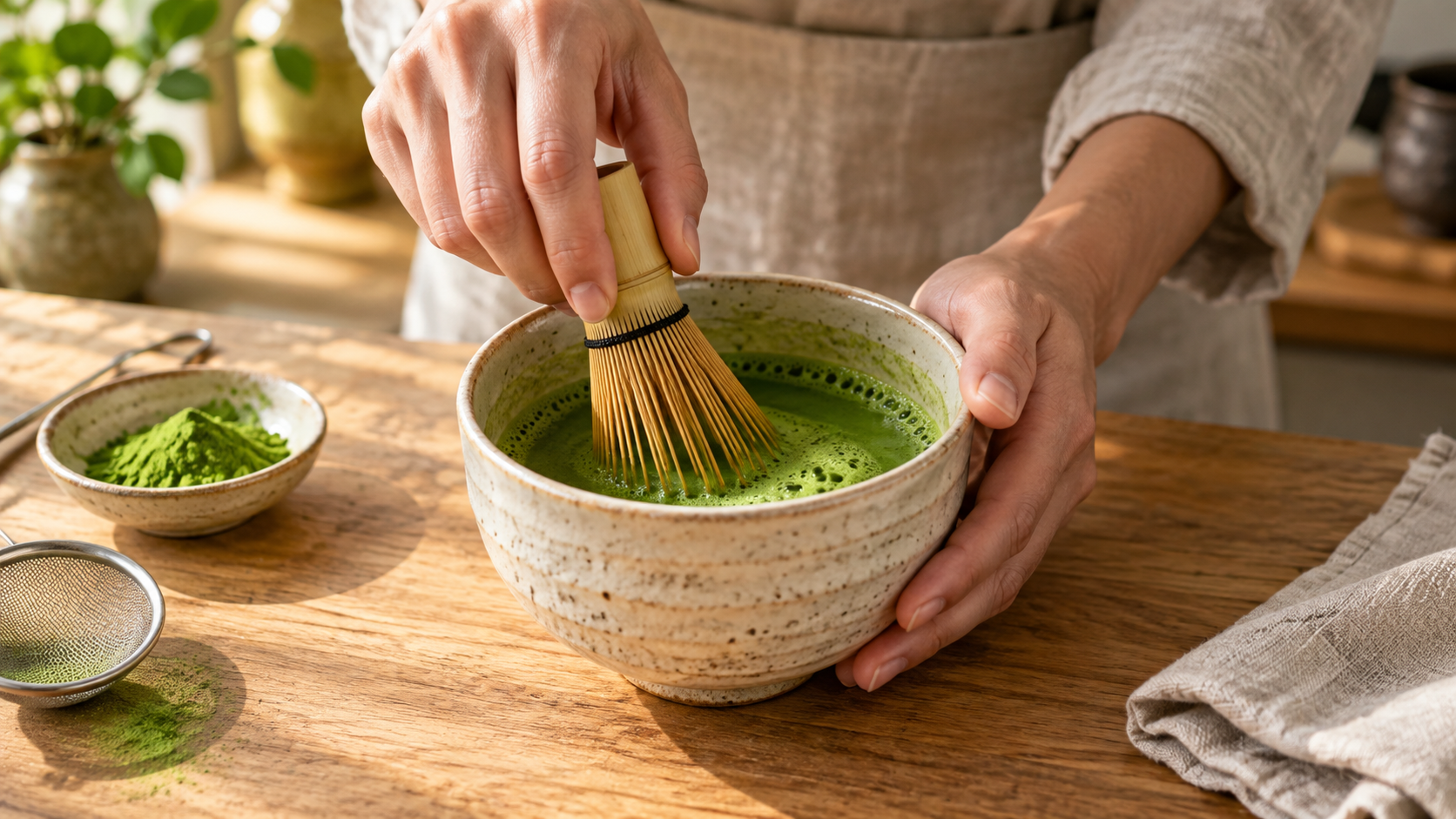
How to Prepare Matcha: A Step-by-Step Guide for Beginners
How to Prepare Matcha: A Step-by-Step Guide for Beginners
A good bowl of matcha should make you want another sip: fresh, pleasantly rich and smooth enough to enjoy slowly. If your homemade version turns out bitter, watery or full of little green lumps, a few small changes can make a big difference.
Learning how to prepare matcha comes down to three things: measuring the powder, controlling the water temperature and mixing it properly. Once you understand those basics, you can make everything from a simple bowl of green tea to a creamy iced matcha latte.
In our guide to what matcha tea is, we explore its origins, flavour and different uses. This practical follow-up focuses on what happens in your kitchen: which tools you need, how much water to add and how to get a drink you actually enjoy.
How to prepare matcha: the quick answer
For one small bowl, sift 1.5–2 g of pure matcha into a bowl, add 70 ml of water at around 75°C and whisk briskly with a bamboo whisk until evenly mixed and lightly foamy. Sip straight away. If it tastes too concentrated, add a little more water.
For a latte, whisk 2 g of matcha with 50 ml of warm water, then add 150–200 ml of milk. Use warm milk for a hot latte or cold milk and ice for an iced version. These are starting ratios: the instructions on your matcha packaging and your own taste can guide small adjustments.
Start with the right matcha powder
Before measuring anything, check the ingredients. Pure matcha and a ready-made matcha latte blend need different quantities. A recipe calling for 2 g of pure matcha will not work the same way with 2 g of a blend containing sugar, milk powder or other ingredients.
For matcha prepared with water
Choose pure matcha intended for drinking on its own. With no milk or sweetener to soften the flavour, the tea itself takes centre stage. Look for a product with clear information about its ingredients, origin and intended use.
Biomatea Organic Ceremonial Matcha from Kagoshima, 30 g is a 100% organic Japanese matcha option for this method. The smaller tin is also convenient when you are discovering how often you like to drink matcha.
For matcha lattes and kitchen recipes
For a latte, choose a matcha whose flavour you enjoy with milk. You can use the same pure matcha you drink with water; you do not need a separate tin just because you are making a latte. If you also want to bake or blend it into smoothies, explore Matcha & CO Organic Culinary Matcha Powder from Uji, 100 g.
Rather than choosing by the grade name alone, read the product description and try a small amount first. Your favourite matcha for a plain bowl may be different from the one you prefer in a large oat latte.
For a convenient sweetened latte
A premixed latte powder is another option, but follow its own recipe. For example, Biomatea Organic Japanese Matcha Latte with Coconut Sugar contains 20% matcha. Its preparation instructions call for 10 g of blend with 200 ml of milk. That is different from using 10 g of pure matcha, which would make a much stronger drink.
Explore the Leaf & Spice matcha collection →
What do you need to make matcha at home?
You can start with a few everyday kitchen items, then add specialist tools if you enjoy the ritual.
- Matcha powder: use pure matcha for the recipes below unless a blend is specifically mentioned.
- A wide bowl: you need enough room to move your whisk without splashing over the sides.
- A bamboo whisk, or chasen: its many fine tines help distribute the powder and create a delicate foam.
- A fine sieve: useful for breaking up dry clumps before water touches them.
- A small digital scale: ideally one that measures in 0.1 g increments.
- A measuring jug and temperature-controlled kettle or thermometer: helpful for repeating a recipe you like.
The Traditional Bamboo Matcha Whisk with 80 Bristles is a useful addition if you want to prepare matcha regularly. If you are putting together your first kit, the Matcha & CO Advanced Matcha Set brings together organic matcha, a spoon and a bamboo whisk; check the product details for the exact contents.
A narrow mug is fine for drinking from, but less comfortable for whisking. Prepare the matcha in a wider bowl, then pour it into your favourite cup.
Matcha water temperature and ratios
Start with water between 70°C and 80°C; 75°C is a useful middle point. A temperature-controlled kettle makes this easy. With a regular kettle, allow the boiled water to cool and check it with a thermometer. A fixed waiting time is only a rough guide because the amount of water and the vessel affect how quickly it cools.
Think of the following quantities as a starting point for home preparation. Make one small change at a time so you can tell what improves the flavour.
| Drink | Pure matcha | Water | Milk or finishing liquid |
|---|---|---|---|
| Small whisked matcha | 1.5–2 g | 70 ml at about 75°C | None; dilute to taste |
| Milder matcha | 1 g | 70 ml at about 75°C | Optional extra warm water |
| Hot matcha latte | 2 g | 50 ml at about 75°C | 150–200 ml warm milk |
| Iced matcha latte | 2 g | 50 ml at about 75°C | 150–200 ml cold milk, plus ice |
| Iced matcha with water | 2 g | 50 ml at about 75°C | 100–150 ml cold water, plus ice |
Why use grams? A teaspoon is a volume measurement. The weight changes depending on how generously you fill it and how tightly the powder is packed. A level teaspoon may hold roughly 2 g, but it is an approximation. A small scale makes it easier to repeat your favourite cup.
For a comparison with a Japanese tea producer’s approach, Marukyu Koyamaen’s preparation guide uses approximately 1.5 g of matcha with 70 ml of water and recommends adjusting preparation to taste.
How to prepare matcha step by step
Makes: one small bowl. Preparation time: around 5 minutes, including heating and cooling the water.
1. Prepare your bowl and whisk
Pour a little warm water into the bowl and briefly wet the bamboo whisk’s tines. Empty the bowl and dry its inside before adding powder. This gives you a warm bowl without leaving damp patches for the matcha to stick to.
Set out everything before opening the tin. Having the sieve, scale and water ready lets you measure the matcha and reseal it promptly.
2. Measure and sift the matcha
Measure 1.5–2 g of matcha and pass it through a fine sieve into the bowl. Use the back of a clean, dry spoon to gently push small clumps through.
Dry clumps are much easier to break up at this stage than after they have become wet on the outside. If you have been getting tiny pockets of powder in your drink, this is the first habit to change.
3. Add the water
Add 70 ml of water at approximately 75°C. For your first attempts, measure the water rather than estimating by eye: a large bowl can make a small serving look deceptively small.
If you prefer to smooth the powder with a small splash first, take that splash from the measured 70 ml, then add the rest. The total amount matters more than whether you pour it in one go or two.
4. Whisk with quick back-and-forth movements
Hold the bowl steady and move the whisk briskly back and forth, in a compact M or W pattern. Keep the movement light and avoid pressing the tines hard against the bottom. Think of moving through the liquid rather than scrubbing the bowl.
Begin by distributing the powder evenly, then keep whisking until the surface looks lightly foamy. Around 15–30 seconds is a useful starting point, but judge the texture instead of chasing a precise number.
5. Finish gently and taste
Slow down near the surface to tidy up larger bubbles, then lift out the whisk. Take a small sip before changing anything.
If it feels too concentrated, add 10–20 ml of warm water. If it is smooth but weaker than you would like, use slightly less water next time. If it is harsh, try a cooler preparation or a smaller powder dose on your next bowl.
6. Drink it freshly prepared
Matcha is a suspension of fine tea particles, so some settling is normal. It does not behave like sugar that disappears into water. Enjoy it soon after whisking, and gently swirl the bowl if necessary.
Do not judge success only by the amount of foam. A smooth, balanced drink matters more than a thick cap of bubbles.
How to make a hot matcha latte
A homemade matcha latte lets you control the balance between tea, creaminess and sweetness. Begin with a modest amount of milk so you can still taste the matcha, then adjust.
Ingredients for one latte
- 2 g pure matcha powder
- 50 ml water at around 75°C
- 150–200 ml milk or plant-based drink
- Optional: a little maple syrup, honey or sugar, to taste
Method
- Sift the matcha into a bowl or suitable cup.
- Add the water and whisk until evenly mixed.
- If using a sweetener, stir it into the warm matcha.
- Warm the milk gently until pleasantly hot, without bringing it to a boil. Froth it if you like.
- Pour the milk over the matcha and stir lightly. Start with 150 ml and add more if you prefer a softer flavour.
Mixing the powder with water first makes it easier to spot and remove clumps before adding milk. Pouring a full mug of milk onto dry matcha usually makes that job harder.
Which milk should you use?
Dairy milk gives a familiar, creamy result. Oat drink adds a cereal note, soy drink can give a fuller texture, and almond drink brings a nutty flavour. The result varies between brands, so use a milk you already enjoy and taste before adding sweetener.
If you want more tea flavour, reduce the milk before automatically adding more matcha. That keeps the serving size consistent while making the tea more noticeable.
How to make an iced matcha latte
The easiest way to get a smooth iced latte is to prepare the matcha separately before combining it with cold milk and ice.
Ingredients for one iced latte
- 2 g pure matcha powder
- 50 ml water at around 75°C
- 150–200 ml cold milk or plant-based drink
- A handful of ice cubes
- Optional sweetener, to taste
Method
- Sift the matcha, add the warm water and whisk until smooth.
- Mix in any sweetener while the matcha is warm.
- Put ice into a glass and add the cold milk, leaving space for the matcha.
- Pour the prepared matcha over the milk.
- Stir before drinking so the flavour is evenly distributed.
The green-and-white layers look beautiful, but the drink tastes more balanced once mixed. For a stronger-tasting iced latte, begin with 150 ml of milk and avoid adding extra water beyond the recipe: melting ice will already dilute it.
Prefer iced matcha without milk?
Prepare the same 2 g matcha and 50 ml water mixture, then add 100–150 ml of cold water and ice. Taste as you go. This makes a longer, lighter drink than a small bowl of warm matcha.
Can you make matcha without a bamboo whisk?
Yes. A bamboo whisk is enjoyable to use and gives you good control, but you can make a satisfying drink with other equipment.
With a handheld milk frother
Sift the powder into a tall, heat-safe vessel, add your measured water and mix in short bursts with the frother head submerged. Leave enough space to prevent splashing. This is particularly convenient for a latte, where the matcha will be mixed with milk anyway.
With a shaker for cold matcha
For a cold drink, put sifted matcha and cool water into a clean, securely closed shaker. Shake vigorously, then pour into your glass and add milk or more water to taste. Use cold or room-temperature liquid; do not shake hot water in a sealed container.
With a spoon
A spoon is a workable fallback, although it is less effective at producing foam. Sift the powder, add a little water and work it into a smooth mixture with the back of the spoon. Gradually stir in the remaining liquid. Pay attention to the corners and bottom of the cup, where dry powder can hide.
Why does my matcha taste bitter, clumpy or weak?
Before replacing your tea or buying more equipment, check the basics. Changing one variable per cup is more useful than changing the powder, temperature and milk quantity all at once.
| Problem | What to check | Try next |
|---|---|---|
| Harsh or bitter flavour | Water temperature, powder dose and freshness | Use 70–75°C water and a measured smaller serving; compare with a matcha intended for drinking plain |
| Little dry lumps | Unsifted powder or a damp bowl | Sift into a dry bowl and mix thoroughly before adding milk |
| Weak latte | Too much milk, water or melting ice | Keep the 2 g powder serving and reduce milk to 150 ml |
| Little or no foam | Whisking motion, vessel shape and concentration | Use a wider bowl and quick back-and-forth movements; prioritise smoothness |
| Large bubbles | Over-aeration or vigorous mixing at the surface | Finish with gentler, shallower whisk movements |
| Powder settling at the bottom | How long the drink has stood | Swirl or stir and drink freshly prepared; some settling is normal |
| Flat or stale flavour | Storage conditions and how long the tin has been open | Compare with a freshly opened pack and keep it tightly sealed |
A useful first experiment: measure the same serving twice and prepare it at two different temperatures, such as 70°C and 80°C. Keep the water quantity identical. Taste the difference and choose the version you prefer.
How to care for your matcha whisk
Rinse a bamboo whisk promptly with clean water so tea does not dry between its fine tines. Let it air-dry fully in a ventilated place before storing it. Avoid leaving it standing in water or putting it away damp.
Follow the care instructions for your particular whisk. For the 80-bristle bamboo chasen, the instructions advise against soap, boiling water and dishwasher cleaning. Gentle handling also helps preserve the tines: heavy pressure while whisking does not improve the drink.
Store your matcha so the next cup tastes good
Close the tin or pouch immediately after measuring your serving. Keep it away from moisture, direct light, heat and strong kitchen smells, following the storage directions on the pack.
A dry spoon matters as much as an airtight lid. Avoid measuring over a steaming kettle or returning a damp scoop to the container. If you prepare matcha only occasionally, a smaller pack may suit you better than a large bag that stays open for months.
For perspective, a 30 g tin provides about 15 servings at 2 g each, or 20 servings at 1.5 g. Use your usual portion and frequency to choose a pack size that fits your routine.
Frequently asked questions about preparing matcha
How much matcha should I use for one cup?
Start with 1.5–2 g for a small bowl prepared with 70 ml of water, or 2 g for a latte. For a gentler first taste, try 1 g. Follow the package instructions for blends, since their matcha content varies.
Does matcha need to steep?
No. You whisk the powder into the liquid and drink it without removing the leaves. There is no tea bag to take out and no steeping timer to follow.
Should I use boiling water for matcha?
For these recipes, let the water cool to 70–80°C before adding it. Start around 75°C and adjust according to your tea’s instructions and the flavour you enjoy.
Do I need to sift matcha every time?
Sifting is a useful routine, especially if the powder has visible clumps. It only takes a moment and makes even mixing easier. If you skip it, you may need to spend longer working out lumps.
Can I mix matcha directly into cold milk?
You can, particularly with a frother or blender, but dry clumps may be harder to remove. Whisking pure matcha with a small measured amount of water first gives you more control. Some instant latte blends are designed for direct mixing; follow their instructions.
Is a matcha latte supposed to contain coffee?
No. The recipes here contain matcha, water and milk. You can add espresso as a separate variation, but it is not needed for a matcha latte.
Why is there green powder at the bottom of my glass?
The fine tea particles can settle as the drink stands. Stir or swirl it before the next sip. Large dry lumps, however, usually mean the powder needed more sifting or mixing at the start.
Can I prepare several servings at once?
You can scale the quantities, but leave enough room in your bowl or jug to mix thoroughly. For the best texture, prepare what you plan to serve now. Keep milk cold until needed for iced drinks, and mix each finished serving before drinking.
Make your next cup of matcha your favourite
Start with one repeatable recipe: 1.5–2 g of pure matcha, 70 ml of water and a temperature around 75°C. Sift, whisk and taste. Once that feels familiar, experiment with extra water, warm milk or an iced version.
For a simple home setup, pair Biomatea Organic Ceremonial Matcha with a bamboo matcha whisk, or browse the full matcha collection to find a tea that suits the way you like to drink it.
Want to explore the tea behind your new ritual? Read What Is Matcha Tea? for more on its origins, flavour and different styles.