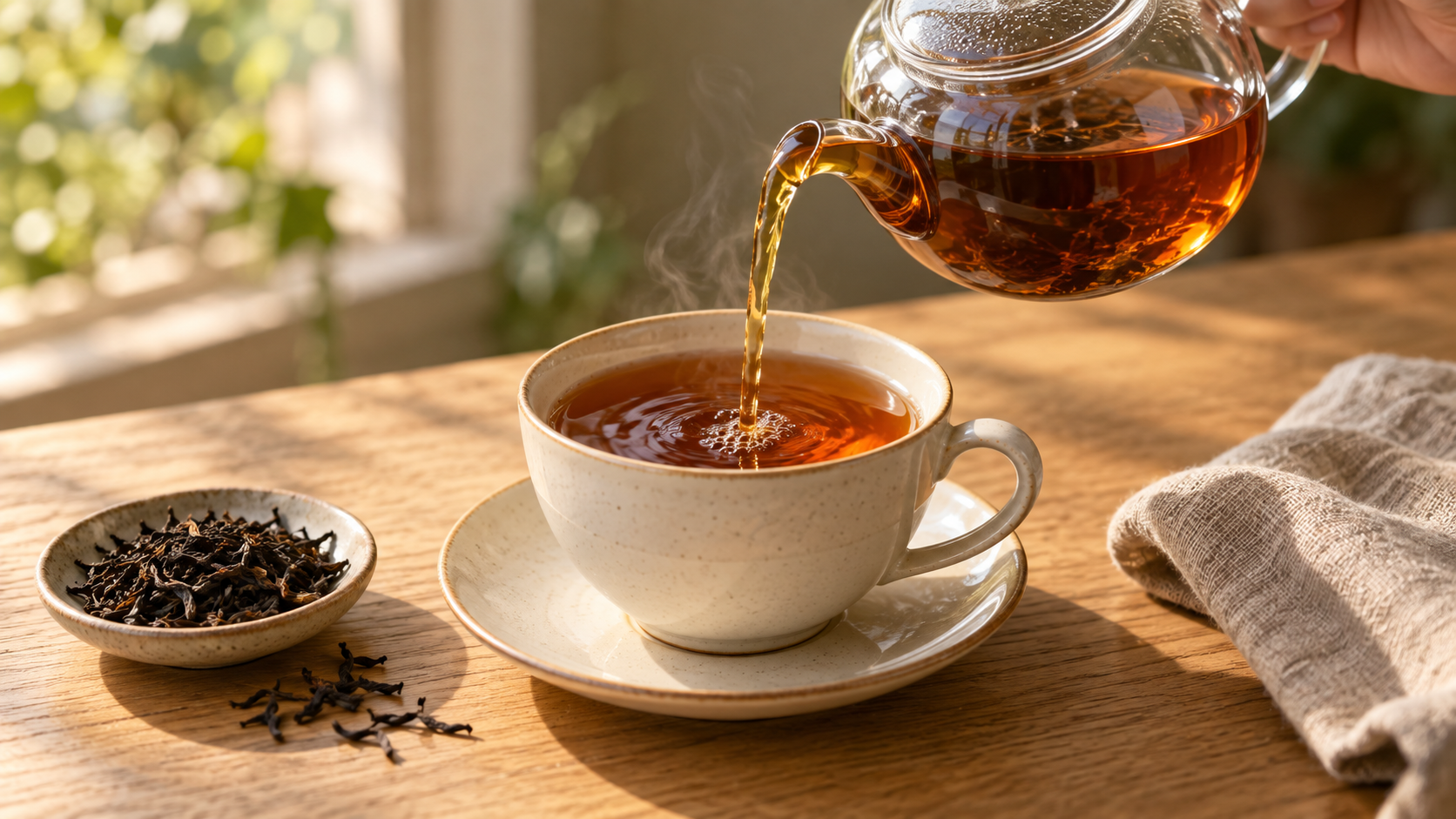
Black Tea Guide: Types, Caffeine and How to Brew It
Black Tea Guide: Types, Caffeine and How to Brew It
A good cup of black tea can be brisk and malty, light and fragrant, or full of citrus and spice. It might be the familiar mug you reach for at breakfast, a delicate afternoon brew or the base of a refreshing homemade iced tea. The pleasure is in finding the style that suits you, then giving it the right amount of leaf, water and time.
This black tea guide explains the main varieties, how much caffeine to expect, how to brew a balanced cup and which blends to try. Along the way, you will find selected teas from the Leaf & Spice black tea collection, with practical reasons to choose each one.
Black tea at a glance: Black tea comes from Camellia sinensis, the same plant used for green tea. Its leaves undergo oxidation during processing, developing their characteristic colour and flavour. For many everyday black teas, around 2–3 g of loose leaf per 250 ml, water at 90–100°C and a 3–5-minute infusion make a useful starting point. Always follow your tea’s own preparation instructions first.
What is black tea?
Black tea is made by processing tea leaves so that they oxidise before the final drying stage. Producers wither the leaves, roll or break them, allow oxidation to develop and then dry them. This changes the leaves’ colour and helps create the range of aromas associated with black tea. The UK Tea & Infusions Association’s processing guide explains these stages in more detail.
The word “black” describes the tea category, rather than a requirement to drink it without milk. English Breakfast with a splash of milk is still black tea. In the cup, the colour can range from golden amber to deep copper or reddish brown.
Nor does black tea have to taste intensely strong. A rich Assam-based breakfast blend and a light Darjeeling offer different experiences, even though both sit within the same broad family. Origin, harvest, leaf size, blending and preparation all help shape the result.
What does black tea taste like?
Useful flavour words include malty, brisk, floral, fruity and earthy. “Malty” suggests a rounded cereal-like richness; “brisk” describes a lively, refreshing character. An Earl Grey adds the fragrant citrus note of bergamot, while a vanilla blend brings a different aromatic direction.
When trying a tea, let the first sip cool enough to taste comfortably. Notice the aroma, how full or light the tea feels and what remains after swallowing. These simple observations are more useful for choosing your next tea than deciding whether a cup is merely “strong” or “weak”.
The main types of black tea
Tea names describe different things. Assam, Darjeeling and Ceylon identify origins; English Breakfast describes a blend style; and Earl Grey describes a tea flavoured with bergamot. Understanding that distinction makes a shelf of unfamiliar names much easier to navigate.
English Breakfast: a familiar, full-flavoured cup
English Breakfast is a useful place to start if you enjoy a substantial cup with breakfast or want tea that works with milk. Recipes differ between producers, so two breakfast blends need not taste identical.
The English Tea Shop blend featured below combines Ceylon and Assam black teas. Try it plain first, then add milk gradually until the balance suits you. Breakfast tea also makes sense for a shared office cupboard or a teapot served to guests who prefer a straightforward, unflavoured brew.
Earl Grey: black tea with fragrant bergamot
Earl Grey pairs a tea base with bergamot, a citrus fruit whose aroma gives the blend its distinctive character. It is a good direction to explore when you like black tea but want a more perfumed cup.
The tea underneath the bergamot matters too. A fuller base can suit milk, while drinking it plain makes it easier to notice the interplay between tea and citrus. If you are comparing Earl Grey blends, consider both the tea base and any additional flavours rather than choosing by the name alone.
Assam: depth and malty character
Assam black tea comes from north-east India and is associated with a robust, malty profile. You will find it sold on its own and used in blends that need body. If you regularly add milk and find lighter teas disappear beneath it, an Assam-based blend is a sensible starting point.
Darjeeling: a lighter style to explore
Darjeeling comes from the Himalayan foothills in India. Its black teas can be delicate and aromatic, with character that varies between harvests. Some show the grape-like quality described as “muscatel”. Try your first cup without milk so you can decide how you enjoy it. The UK Tea & Infusions Association’s varieties guide covers Assam, Darjeeling and other tea styles.
Ceylon: a broad range from Sri Lanka
Ceylon is the traditional name still used for tea from Sri Lanka. Growing region and elevation create considerable variety, so it is helpful to read the description of the individual tea. Expect the category to include both fuller and lighter styles, often described as bright or brisk. Read more about these regional differences in the UK Tea & Infusions Association’s guide to tea origins.
Flavoured black tea: fruit, vanilla and spice
Flavoured blends offer a straightforward way to explore tea through tastes you already enjoy. Vanilla might appeal if you like softly aromatic drinks; peach and ginger give you fruit notes with a warming edge.
Read the ingredients as well as the flavour name. Fruit pieces, fruit concentrates, spices and flavourings play different roles in a blend. A tea described as fruity is not necessarily sweetened, and the name alone does not tell you its sugar content. Likewise, adding fruit or spice to a black tea base does not make it caffeine-free.
Which black tea should you try?
Start with the way you want to drink your tea. A dependable breakfast mug, a fragrant afternoon cup and a fruity iced drink each suggest a different choice. These five options offer clear starting points.
| If you enjoy… | A tea to try | Why choose it? |
|---|---|---|
| A classic cup, plain or with milk | English Tea Shop Organic Fairtrade English Breakfast — 20 Tea Bags | A Ceylon and Assam blend in a convenient format for everyday brewing. |
| Citrus fragrance and loose leaf brewing | Premium Earl Grey Black Tea with Natural Bergamot — 150 g | Assam and South Indian black teas with natural bergamot flavouring. |
| Vanilla and a cosy afternoon cup | Tatasse Vahiné Organic Vanilla Black Tea — Bourbon Vanilla & Date, 100 g | A loose leaf blend combining Chinese and Assam black teas with vanilla, date and calendula. |
| Fruit notes, gentle spice or iced tea | English Tea Shop Organic Ginger & Peach Black Tea — 20 Tea Bags | Black tea with ginger, natural peach flavour and peach concentrate; suitable for brewing hot or serving over ice. |
| Black tea with less caffeine | English Tea Shop Organic Decaffeinated Black Tea — 20 Tea Bags | A CO₂-decaffeinated Assam and Kenyan blend. Decaffeinated tea can still contain residual caffeine. |
For a first order, choosing one familiar tea and one different flavour can be more useful than buying several similar blends. For example, pair English Breakfast with Earl Grey to compare plain and citrus-flavoured styles. If you already know you enjoy bergamot, a vanilla or peach blend gives you a different direction to explore.
How to brew black tea well
The most useful habit is to make the first cup according to the pack instructions and change one thing at a time afterwards. If you adjust the amount of leaf, temperature and steeping time together, it becomes difficult to tell which change helped.
1. Measure for the cup you actually use
For many loose leaf black teas, 2–3 g per 250 ml is a practical starting point. A large breakfast mug may hold much more than a small teacup, so “one spoon per cup” can be misleading. Weighing the leaves once helps you learn what the right portion looks like.
Use the individual tea’s recommended dose when it differs. Premium Earl Grey, for example, specifies 12 g per litre, equivalent to 3 g per 250 ml. Tatasse Vahiné specifies approximately 2.5 g per 200 ml.
2. Use the recommended water temperature
Black tea commonly uses water around 90–100°C, but the ideal temperature depends on the tea. Several of the featured blends specify freshly boiled water at 100°C. Follow that guidance, especially when a blend contains additional ingredients. A delicate tea with different instructions should receive its own treatment.
Fill the kettle with the water you need. If tap water has a pronounced taste, compare one brew made with filtered water and see which you prefer.
3. Give loose leaves room to infuse
A roomy basket infuser makes it easy to measure the tea, immerse it fully and lift it out when the timer finishes. Avoid packing leaves tightly into a small tea ball. If you brew directly in a teapot, strain the tea into cups or another pot once it is ready.
4. Time the infusion and remove the tea
Many black teas use a 3–5-minute infusion, but their specific instructions matter. Start at the shorter end of the stated range when trying a blend for the first time. Remove the leaves or bag when brewing is complete; leaving them in the mug means the tea continues to extract as you drink.
For more help with equipment and measurements, read our guide to brewing loose leaf tea. The UK Tea & Infusions Association’s brewing advice also emphasises following the instructions on the pack.
Preparation guide for the featured teas
| Tea | Amount | Water and time |
|---|---|---|
| English Tea Shop English Breakfast | 1 tea bag per cup | 100°C; 4–5 minutes |
| Premium Earl Grey | 12 g per litre; equivalent to 3 g per 250 ml | 100°C; 3–5 minutes |
| Tatasse Vahiné | Approximately 2.5 g per 200 ml | 100°C; 3–5 minutes |
| English Tea Shop Ginger & Peach | 1 tea bag per cup | Freshly boiled water; 3–4 minutes |
| English Tea Shop Decaffeinated Black Tea | 1 tea bag per cup | 100°C; 4–5 minutes |
These instructions apply to a conventional cup or teapot infusion. If the current packaging gives different directions, use those.
How to fix bitter, weak or unbalanced tea
If it tastes too bitter: Check that the tea was removed on time. For your next cup, use the shorter end of the recommended infusion range. If you were generous with the leaves, return to the stated dose before changing the temperature.
If it tastes weak: Check the water volume. A single bag in an oversized mug may not give the strength you want. With loose leaf tea, try a little more leaf on the next brew while keeping the steeping time within the recommended range.
If it tastes good until you add milk: Use a smaller splash first. You may prefer a fuller tea base or a slightly larger leaf dose for future cups. Aim to keep enough tea flavour in the finished drink.
How much caffeine is in black tea?
Black tea naturally contains caffeine. The European Food Safety Authority gives approximately 50 mg in a 220 ml cup as a useful reference figure. It is an estimate for a typical serving, rather than a measured value for every tea in this guide.
| Drink | Example serving | Approximate caffeine |
|---|---|---|
| Black tea | 220 ml | 50 mg |
| Filter coffee | 200 ml | 90 mg |
| Espresso | 60 ml | 80 mg |
These are EFSA’s illustrative serving sizes, so the table compares example drinks, not equal volumes. Actual quantities vary. See EFSA’s caffeine information for the source figures.
When choosing tea, keep the size of your usual mug in mind. The amount of tea and the way you prepare it affect what ends up in your cup. A light colour or a mild taste is not a reliable caffeine measurement.
Does decaffeinated black tea contain caffeine?
Decaffeination reduces caffeine but does not necessarily remove all of it. The FDA’s caffeine guide distinguishes decaffeinated drinks from caffeine-free drinks.
If you want the familiar taste of black tea with less caffeine, the English Tea Shop decaffeinated blend in the selection above is worth considering. Its Assam and Kenyan teas are decaffeinated using a CO₂ process. If you want to avoid caffeine altogether, look for a clearly labelled caffeine-free infusion and check the full blend.
Choose your drinking time with your own caffeine sensitivity in mind. An evening cup may affect your sleep even if drinking the same tea earlier in the day feels fine.
Black tea vs green tea: which should you choose?
Both come from the tea plant; processing creates their different styles. Black tea undergoes oxidation, while green tea is heated early in processing to limit it.
For shopping purposes, start with flavour and how you like to serve a cup. If you want a breakfast blend that takes milk well, explore black tea. If fresh, grassy or gently vegetal notes sound appealing, browse the green tea collection.
There is plenty of variety within both categories. A light black tea may suit you more than a strongly brewed green tea, and a fruity green blend may appeal even if plain green tea has not been your favourite. Compare individual descriptions rather than treating either category as a single flavour.
Loose leaf black tea or tea bags?
Loose leaf tea gives you flexibility. You can measure a dose for your favourite mug, adjust it for a teapot and see the dry ingredients before brewing. It suits people who enjoy a little experimentation and already have a strainer or infuser.
Tea bags make preparation convenient. They are easy to portion, useful at work and straightforward to offer to guests. If you are new to a flavour, a box of individually portioned bags can also be a simple introduction.
Format alone does not settle which tea you will enjoy more. Consider the blend, the freshness, how you prepare it and the time you want to spend making a cup. A practical cupboard might contain loose leaf Earl Grey for unhurried afternoons and English Breakfast bags for busy mornings.
Ways to enjoy black tea
With milk
Brew the tea in water first, remove the bag or leaves and then add milk gradually. This makes it easier to judge the strength and stop at the balance you like. English Breakfast is a straightforward starting point; vanilla black tea is another option if you enjoy a softly aromatic cup.
Try your preferred dairy milk or plant-based drink in a small quantity first. Their flavours differ, so a milk you love in coffee may give a different result in tea. Keep lemon for a separate cup, as its acidity can curdle dairy milk.
Plain, with lemon or alongside food
Before adding anything, taste a new tea plain. You may find it already has the balance you want. For a citrus variation, add a small slice of lemon and taste again before adding more.
For an easy afternoon pairing, try Earl Grey with plain shortbread, vanilla black tea with an oat biscuit, or breakfast tea alongside buttered toast. These are starting ideas: keep the food simple when you want to notice the tea itself.
A simple peach and ginger iced black tea
This serving suggestion uses English Tea Shop Organic Ginger & Peach Black Tea. Its product instructions recommend a stronger infusion for serving over ice.
For one large glass: Use two tea bags, 200 ml freshly boiled water, plenty of ice and, if you like, a few peach slices or a little lemon.
- Steep both tea bags in the hot water for 3–4 minutes.
- Remove the bags. If you want to sweeten the tea, stir in a small amount of sweetener while it is still warm.
- Pour carefully over plenty of ice in a vessel suitable for both boiling water and sudden temperature changes. Alternatively, cool the tea first, then add it to an ordinary glass of ice.
- Add your chosen fruit, taste and adjust with a little cold water if needed. Serve straight away.
The extra tea gives you room for dilution as the ice melts. For more flavours and methods, see our guide to making iced tea at home.
Try an Earl Grey milk drink
For a simple variation, make a smaller, concentrated cup of Earl Grey using the normal steeping time, then add warm, frothed milk. Start with roughly equal volumes of brewed tea and milk, adjusting to taste. A little vanilla can complement the bergamot if you enjoy that combination. Increase the amount of leaf for a stronger tea base instead of leaving it to infuse indefinitely.
How to store black tea
Keep dry tea in a well-sealed container in a cool, dry cupboard, away from sunlight and strongly scented foods. A shelf beside open spice jars is less suitable than a separate, odour-free space. Reseal the original pack properly or use a clean, dry tea tin.
Avoid opening the pack directly above a steaming kettle. Use a dry spoon, close the container after measuring and follow the storage guidance and best-before date on the packaging.
When comparing pack sizes, think about how often you will drink that flavour. A larger pack can be practical for an everyday favourite, while a smaller quantity makes sense when you are trying something unfamiliar. The right purchase is the tea you will enjoy using.
Frequently asked questions about black tea
Is English Breakfast black tea?
Yes. English Breakfast is a black tea blend style. Its exact recipe depends on the producer. The English Tea Shop version featured here combines Ceylon and Assam teas.
What is the difference between English Breakfast and Earl Grey?
English Breakfast is generally a blend of unflavoured black teas. Earl Grey adds the distinctive citrus aroma of bergamot. Choose breakfast tea for a straightforward classic cup or Earl Grey when you want that fragrant citrus character.
Is black tea better with or without milk?
That depends on your taste and the tea. Try a new blend plain first. Full-flavoured breakfast blends often suit milk, while you may prefer to enjoy the subtleties of a lighter tea without it.
How long should black tea steep?
Many black teas use 3–5 minutes for an ordinary cup or teapot infusion. Follow the pack instructions: the Ginger & Peach blend in this guide specifies 3–4 minutes, while the featured English Breakfast uses 4–5 minutes.
Why does my black tea taste bitter?
Check the steeping time and the amount of tea first. Use a timer, remove the leaves when brewing finishes and try the shorter end of the recommended time range. A tea that still feels too intense may simply be a stronger style than you prefer.
Does adding milk remove caffeine?
No. Milk does not remove the caffeine already in the brewed tea. Adding it to a cup changes the drink’s volume and flavour, but the caffeine from that infusion remains.
Which black tea is a good choice for beginners?
English Breakfast is a sensible starting point if you want a familiar cup with the option of milk. Earl Grey suits people who enjoy citrus aromas, while a vanilla or peach blend offers an introduction through flavours you may already like.
Find a black tea you will look forward to brewing
Choose the flavour direction that appeals to you, make the first cup according to its instructions and adjust from there. A small change in dose or timing can help you get much more enjoyment from the same tea.
Whether your preference is a classic breakfast mug, fragrant Earl Grey or a fruit-flavoured afternoon cup, explore the black tea collection at Leaf & Spice and choose the blend you would most like to try next.