
What Are the Best BBQ Spices?
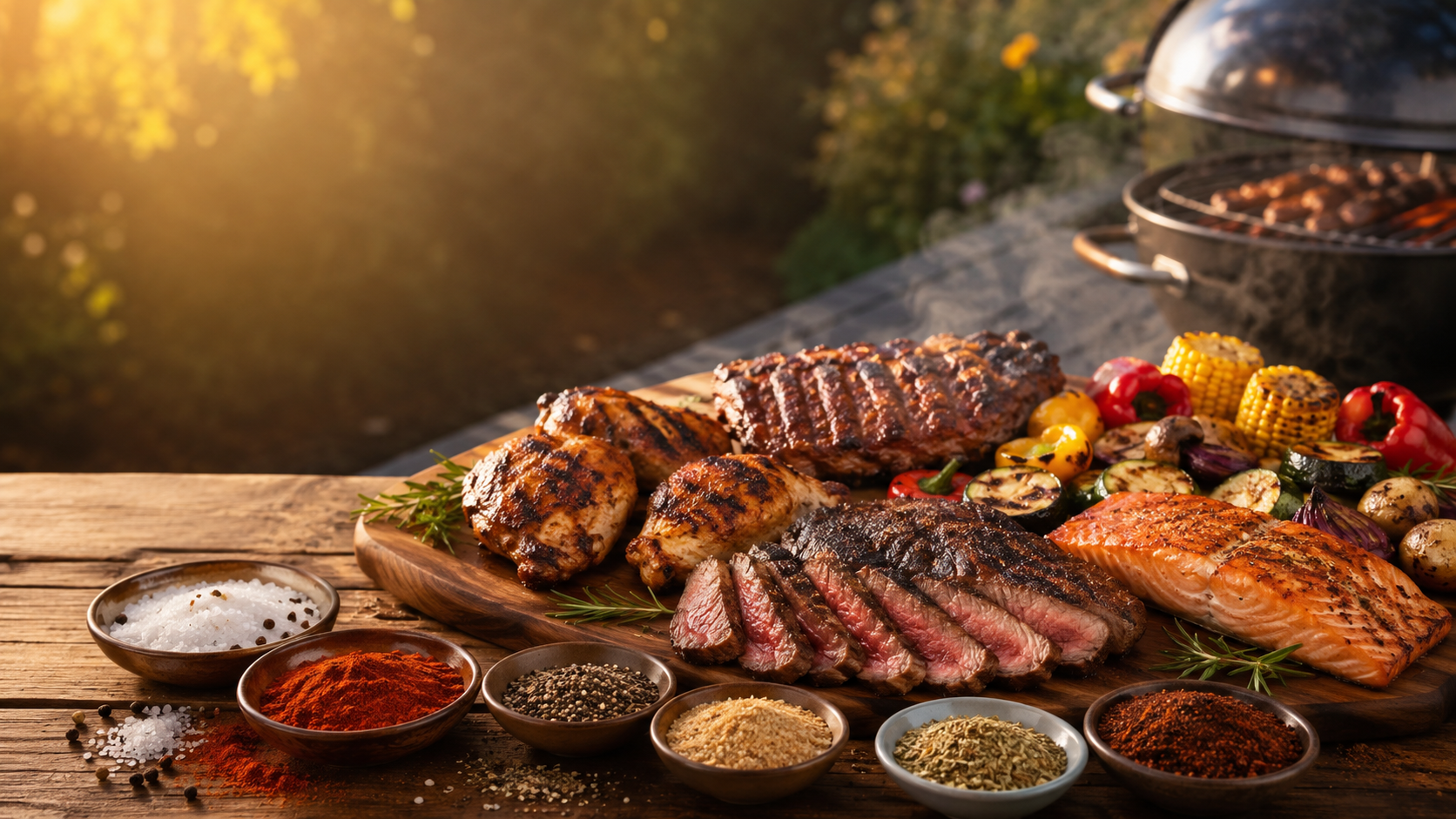
The best BBQ spices depend on what you are grilling and the flavour you want to create. However, several ingredients appear repeatedly in successful barbecue seasonings.
Popular BBQ spices include:
- Sea salt
- Black pepper
- Garlic
- Smoked paprika
- Sweet paprika
- Chilli
- Mustard
- Onion
- Cumin
- Thyme
- Rosemary
- Sage
- Fennel
- Citrus peel
- Bay leaf
Salt enhances the natural flavour of the food, while pepper and chilli provide heat. Garlic and onion add savoury depth, paprika contributes colour and warmth, and Mediterranean herbs create freshness.
A good BBQ rub combines several of these elements in a balanced proportion. This means you do not need to measure every spice separately each time you light the grill.

What Is a BBQ Rub?
A BBQ rub is a mixture of salt, herbs, spices and other aromatic ingredients applied directly to the surface of meat, fish or vegetables.
It is called a rub because the mixture is usually rubbed or pressed gently onto the food before cooking. During grilling, the seasoning combines with the food’s natural moisture and fat to create a flavourful outer layer.
BBQ rubs can be:
- Dry, containing only dry herbs, spices and salt
- Wet, mixed with oil, mustard, honey, yoghurt or another liquid
- Sweet, containing sugar or sweet spices
- Spicy, with chilli, cayenne or pepper
- Smoky, featuring smoked paprika, charcoal or roasted ingredients
- Herbal, using rosemary, thyme, sage, oregano or fennel
- Citrusy, with lemon, lime or orange peel
Ready-made rubs are especially practical because their flavours have already been balanced. You can season the food quickly and achieve more consistent results without opening several different spice jars.

Best All-Purpose BBQ Seasoning
When you need one seasoning that works on almost everything, choose a classic combination of salt, pepper and garlic.
The BBQ King SPG Rub combines these three essential barbecue flavours. It can be used on meat, vegetables and roasted dishes, making it a useful starting point for both beginners and experienced grill enthusiasts.
SPG stands for:
- Salt
- Pepper
- Garlic
This simple combination works because it enhances the food instead of covering its natural taste.
Use an SPG rub for:
- Beef steaks
- Burgers
- Pork chops
- Chicken thighs
- Grilled mushrooms
- Potatoes
- Courgettes
- Corn on the cob
It is also an excellent base seasoning. You can use it on its own or add paprika, chilli, herbs or citrus depending on the dish.
Best BBQ Spices for Chicken
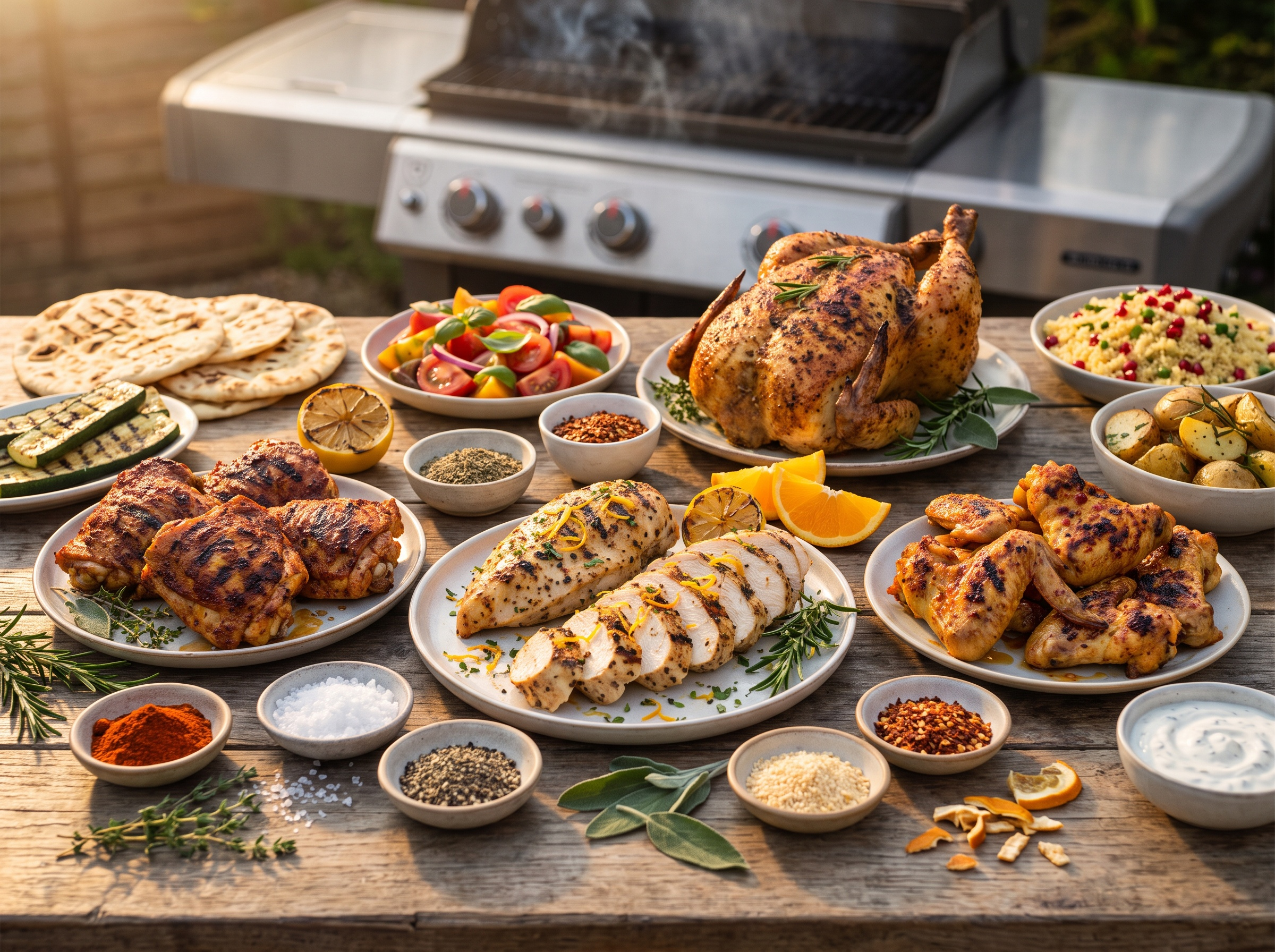
Chicken has a relatively mild flavour, which makes it suitable for many different seasonings. It works especially well with garlic, paprika, citrus, thyme, rosemary, sage, pepper and gentle chilli.
The best seasoning depends on the part of the chicken you are grilling.
Chicken Breast
Chicken breast is lean and can dry out quickly, so lighter, fresher seasonings usually work best.
Good flavours for grilled chicken breast include:
- Lemon
- Orange
- Garlic
- Black pepper
- Thyme
- Rosemary
- Parsley
- Mild chilli
The BBQ King Citrus Rub is particularly suitable for chicken breast. It combines orange and lemon peel with sea salt, herbs and black pepper, creating a fresh Mediterranean-style flavour.
Lightly coat the chicken with olive oil, apply the rub and leave it in the refrigerator for 30 to 60 minutes before grilling.
Serve citrus-seasoned chicken with:
- Grilled courgettes
- Tomato salad
- Couscous
- Roasted potatoes
- Flatbread
- Yoghurt sauce
Chicken Thighs
Chicken thighs contain more fat than chicken breast and can handle stronger seasonings.
Try combining:
- Garlic
- Smoked paprika
- Mustard
- Chilli
- Black pepper
- Thyme
- Sage
For an aromatic herbal flavour, use the BBQ King Mammamia Rub. The blend contains Mediterranean ingredients including sea salt, fennel, sage, thyme, garlic, mustard and bay leaf.
This seasoning is a good choice when you want chicken that feels more like a complete Mediterranean dish rather than a traditional sweet and smoky barbecue.
Chicken Wings
Chicken wings work well with bold flavours because they have plenty of skin and surface area.
Good seasoning options include:
- Chilli and garlic
- Lemon pepper
- Smoked paprika
- Sweet and spicy BBQ seasoning
- Pepper and mustard
- Spicy butter
For bright flavour with a little warmth, try the BBQ King LPG Rub. LPG refers to lemon, pepper and garlic. The blend delivers citrus freshness, gentle heat and a deeper barbecue aroma.
You can also prepare a finishing butter using A Man A Grill Chili Butter Seasoning. Mix it with softened butter and brush it over the wings shortly before serving. The seasoning is designed for homemade chilli butter and can also be used with grilled meat, vegetables and potatoes.
Whole Grilled Chicken
A whole chicken needs a seasoning that can flavour the skin and complement the meat underneath.
Use a mixture containing:
- Sea salt
- Garlic
- Pepper
- Paprika
- Sage
- Thyme
- Rosemary
- Mustard
Apply the seasoning over the skin, underneath the skin where possible and inside the cavity. For more flavour, season the chicken several hours before cooking and keep it refrigerated.

Best BBQ Spices for Beef and Steak
Beef has a deep natural flavour and generally needs fewer ingredients than chicken or pork. A good steak can be seasoned simply with salt, pepper and garlic.
However, stronger rubs can add more complexity to burgers, brisket, ribs and larger cuts.
Classic Steak Seasoning
For a high-quality steak, begin with:
- Coarse sea salt
- Freshly ground black pepper
- Garlic
- Optional rosemary or mustard
The BBQ King SPG Rub provides the essential salt, pepper and garlic combination without introducing too many competing flavours.
Press the seasoning onto both sides of the steak. Avoid repeatedly moving or flipping the steak while it cooks, as a stable cooking surface helps create a better crust.
Smoky Seasoning for Beef
For burgers, brisket, beef ribs and thicker steaks, consider a darker and smokier seasoning.
The BBQ King Carbon Rub combines black garlic and charcoal in an entirely black seasoning blend. It is designed to add bold, smoky and gourmet character to barbecue dishes.
This style of rub is particularly effective when presentation matters. The dark seasoning creates a dramatic crust that contrasts with the inside of the meat.
Use it on:
- Beef burgers
- Ribeye steak
- Sirloin
- Beef ribs
- Brisket
- Roasted potatoes
- Grilled mushrooms
Because the rub already has a distinctive flavour and appearance, pair it with simple side dishes such as grilled corn, potatoes, coleslaw or a green salad.
Easy Steak and Grill Seasoning
For casual weekend grilling, a prepared steak blend such as Happy Weekend Steak & Grill Seasoning offers a convenient way to season steaks, burgers and other grilled foods without measuring several individual spices.
This type of seasoning is particularly useful for:
- Camping trips
- Picnics
- Holiday barbecues
- Small outdoor kitchens
- Motorhome travel
- Quick weekday grilling

Best BBQ Spices for Burgers
Burgers benefit from straightforward, savoury seasoning.
For classic beef burgers, use:
- Salt
- Black pepper
- Garlic
- Onion
- Mustard
- Smoked paprika
Season the outside of the patties shortly before grilling. Avoid mixing excessive salt directly into the minced meat too early, as the final texture may become firmer than desired.
A classic SPG seasoning works well for traditional burgers, while a charcoal and black garlic rub creates a more distinctive gourmet burger.
For cheeseburgers, consider serving the meat with:
- Mature cheddar
- Smoked cheese
- Caramelised onions
- Pickles
- Mustard
- Chilli butter

Best BBQ Spices for Pork
Pork works especially well with sweet, smoky, spicy and herbal flavours.
Common pork seasonings include:
- Paprika
- Garlic
- Black pepper
- Mustard
- Fennel
- Sage
- Thyme
- Chilli
- Cumin
- Brown sugar
Pork Chops
Pork chops need enough seasoning to create a flavourful surface without overwhelming the meat.
Try:
- SPG seasoning for a classic result
- Citrus rub for a fresher summer dish
- Mediterranean herbs for an aromatic flavour
- Chilli butter for a richer finish
Brush the chops lightly with oil before applying a dry rub. After grilling, allow them to rest briefly before serving.
Pork Tenderloin
Pork tenderloin pairs particularly well with mustard, garlic, sage, thyme, fennel and citrus.
The Mediterranean ingredients in BBQ King Mammamia Rub make it a natural choice for pork tenderloin.
Season the tenderloin evenly and cook it over indirect heat after briefly searing the outside.
Pork Ribs
Pork ribs can handle a heavier coating of seasoning than smaller cuts.
A good rib rub typically contains:
- Salt
- Pepper
- Garlic
- Paprika
- Mustard
- Chilli
- Cumin
- A small amount of sugar
Sugar helps create a caramelised surface, but it can burn over very high direct heat. Sweet rubs are therefore better suited to slower cooking over indirect heat.
Pulled Pork
Pulled pork needs a strong seasoning because the flavour must penetrate and season a large piece of meat.
Apply the rub generously to the outside of the pork shoulder. Ideally, season it several hours before cooking.
For a balanced flavour, combine:
- Two parts paprika
- One part garlic
- One part black pepper
- One part mustard
- Half a part chilli
- A small amount of brown sugar
Alternatively, use a prepared BBQ rub and adjust the heat or sweetness according to your preference.

Best BBQ Spices for Fish and Seafood
Fish usually needs a lighter seasoning than beef or pork. Heavy smoky rubs can easily hide its delicate flavour.
The best spices for grilled fish include:
- Lemon
- Black pepper
- Garlic
- Dill
- Parsley
- Thyme
- Mild chilli
- Fennel
- Mustard
- Sea salt
The BBQ King Fish Rub is made for grilled fish, seafood, salmon, prawns, vegetables and light Mediterranean-style dishes.
Salmon
Salmon has enough natural fat to work with slightly stronger seasoning.
Try:
- Fish rub
- Lemon pepper garlic rub
- Citrus rub
- Mediterranean herbs
- Chilli and lime
- Mustard and dill
Apply the seasoning shortly before cooking and grill the salmon with the skin side facing down first.
White Fish
Cod, sea bass, sea bream and similar white fish work best with fresh and gentle seasonings.
Choose:
- Citrus peel
- Sea salt
- Garlic
- Parsley
- Dill
- White pepper
- Mild chilli
The BBQ King Citrus Rub adds lemon and orange notes without requiring a complicated marinade.
Prawns and Seafood Skewers
Prawns cook quickly, so they are ideal for strong but simple flavours.
Combine prawns with:
- Lemon pepper garlic rub
- Chilli butter
- Fish rub
- Garlic and parsley
- Paprika and lime
Place the prawns on skewers and grill them briefly over direct heat. Brush with seasoned butter immediately after cooking.

Best Spices for Grilled Vegetables
BBQ seasonings are not only for meat. Vegetables often become sweeter and more aromatic when grilled, making them an excellent base for herbs, citrus, pepper and garlic.
Good vegetables for grilling include:
- Courgettes
- Aubergines
- Peppers
- Mushrooms
- Corn
- Onions
- Asparagus
- Potatoes
- Sweet potatoes
- Cauliflower
Mediterranean Grilled Vegetables
For courgettes, aubergines, peppers and onions, use an aromatic blend containing thyme, sage, fennel, garlic and bay leaf.
The BBQ King Mammamia Rub works particularly well for Mediterranean-style vegetable platters.
Cut the vegetables into similar-sized pieces, add olive oil and apply the seasoning evenly.
Citrus-Grilled Vegetables
Citrus seasoning works well with:
- Asparagus
- Courgettes
- Fennel
- Peppers
- Cauliflower
- Sweet potatoes
Use the BBQ King Citrus Rub when you want a lighter and fresher alternative to a traditional smoky BBQ blend.
Grilled Potatoes
Potatoes can handle stronger seasoning than most vegetables.
Try:
- Salt, pepper and garlic
- Chilli butter
- Smoked paprika
- Mediterranean herbs
- Charcoal and black garlic seasoning
Parboil larger potatoes before grilling or cut them into thin wedges so they cook evenly.
After grilling, toss the potatoes with butter prepared using A Man A Grill Chili Butter Seasoning for a spicy and savoury finish.
Choose a Dry Rub When:
- You want a strong crust
- You are grilling steak or burgers
- You have limited preparation time
- You want concentrated flavour on the surface
- You are using a smoker or indirect cooking method
Choose a Marinade When:
- You want to add oil and acidity
- You are cooking lean chicken breast
- You want a softer herbal or citrus flavour
- You are preparing skewers
- You want to season the food several hours in advance
Always marinate meat, poultry and seafood in the refrigerator rather than at room temperature. Do not reuse marinade that has touched raw meat unless it is boiled thoroughly first.

Can You Turn a Dry Rub into a Marinade?
Yes. A prepared BBQ rub can easily become a marinade.
For approximately 500 grams of food, mix:
- One to two tablespoons of BBQ rub
- Two tablespoons of olive oil
- One tablespoon of lemon juice, vinegar or yoghurt
- Optional teaspoon of honey or mustard
Mix everything in a bowl and coat the food evenly.
Use less acid for delicate fish and more oil for lean chicken breast. For pork and beef, mustard can help the seasoning adhere to the surface.
How Much BBQ Seasoning Should You Use?
As a general starting point, use approximately one tablespoon of seasoning for every 500 grams of meat or vegetables.
However, the correct amount depends on:
- The salt content of the blend
- The size and thickness of the food
- Whether the seasoning contains sugar
- How long the food will cook
- Your preferred level of spice
- Whether you will add sauce later
For a salty blend, begin with less. You can always add a finishing seasoning after cooking, but you cannot easily remove excess salt.
Approximate Guide
For 500 grams of food, try:
- Fish: one to two teaspoons
- Vegetables: two teaspoons
- Chicken breast: two to three teaspoons
- Chicken thighs: one tablespoon
- Pork chops: one tablespoon
- Steak: two teaspoons to one tablespoon
- Ribs: one to two tablespoons
- Large roasting cuts: enough to coat the entire surface evenly
The food should be covered with a visible, even layer, but the seasoning should not form a thick paste unless you are deliberately creating a heavy crust.
When Should You Season Meat Before Grilling?
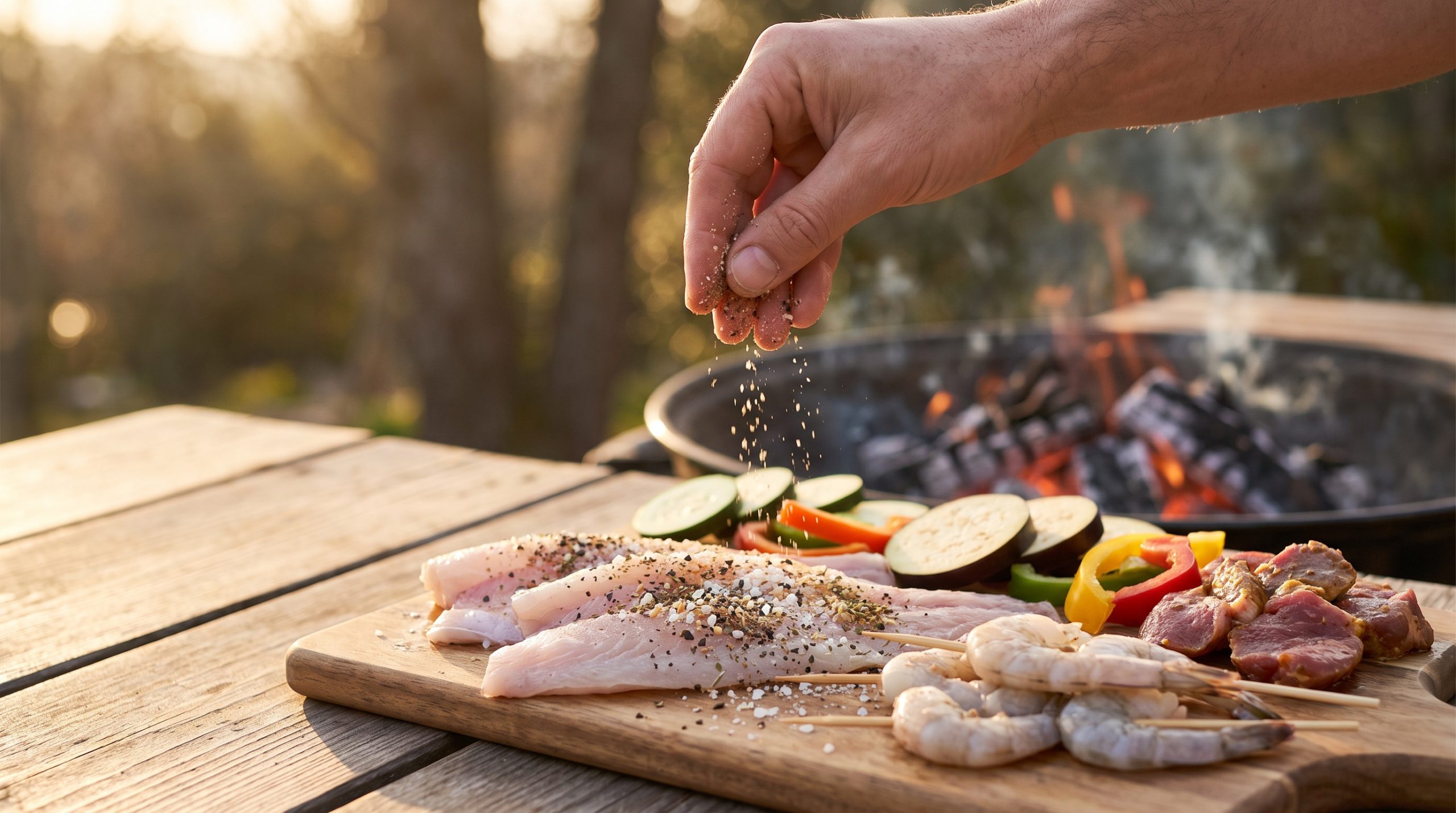
Timing can affect both flavour and texture.
Immediately Before Grilling
- Season immediately before cooking when:
- Grilling delicate fish
- Cooking prawns
- Preparing thin vegetables
- Using a salty blend on small cuts
- You are short on time

30 to 60 Minutes Before Grilling
This is a useful approach for:
- Chicken breast
- Chicken thighs
- Pork chops
- Burgers
- Vegetable skewers
- Fish fillets
It gives the seasoning time to adhere while keeping preparation simple.

Several Hours Before Grilling
Season several hours in advance for:
- Whole chicken
- Pork tenderloin
- Beef roasts
- Large steaks
- Thick pork chops
- Ribs
Keep the food covered in the refrigerator until you are ready to cook it.

Overnight
Overnight seasoning works best for:
- Pork shoulder
- Brisket
- Ribs
- Whole poultry
- Large roasting cuts
Be careful with very salty rubs and acidic marinades, particularly on delicate foods.
How to Apply a BBQ Rub Correctly
Follow these simple steps for better and more consistent results.
Five Easy BBQ Flavour Combinations
You do not need dozens of ingredients to create an excellent barbecue. Start with one of these flavour combinations.

1. Classic Salt, Pepper and Garlic

2. Mediterranean Herbs and Garlic
Best for:
- Chicken
- Pork tenderloin
- Salmon
- Courgettes
- Aubergines
- Potatoes
Recommended seasoning:

3. Lemon, Pepper and Garlic
Best for:
- Chicken wings
- Chicken breast
- Fish
- Prawns
- Asparagus
- Vegetable skewers
Recommended seasoning:

4. Black Garlic and Smoky Charcoal
Best for:
- Burgers
- Steaks
- Beef ribs
- Brisket
- Mushrooms
- Dark roasted vegetables
Recommended seasoning:

5. Spicy Chilli Butter
Best for:
- Corn
- Potatoes
- Chicken wings
- Steak
- Grilled bread
- Prawns
Recommended seasoning:
A Man A Grill Chili Butter Seasoning
Mix the seasoning with softened butter, refrigerate it until firm and add a small portion to freshly grilled food.